

Looking into the Inadequate Legal Recognition for Women’s Tenure Rights Across the Global South
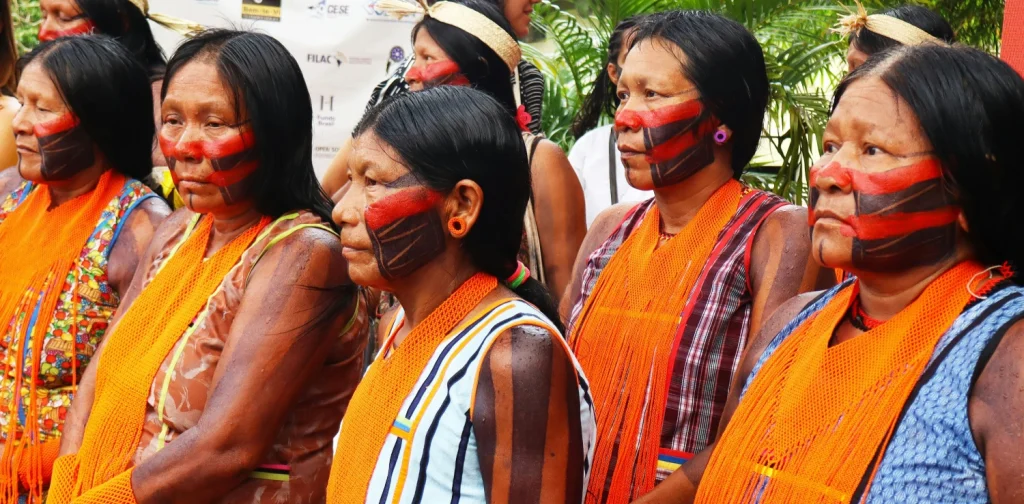
Photo: Mirna Wabi-Sabi in Unsplash.
Indigenous women play a vital role in life on Earth. Besides preserving traditional cultures and knowledge, they manage resources and preserve biodiversity, all while ensuring food security. However, they are still facing discrimination that negates their voices and experiences, thus preventing them from exercising their rights and fulfilling their roles. One of which is access to land rights. A report by the Resilience and Resistance Initiative (RRI) reveals that protections of women’s tenure rights are lacking across the Global South.
Women’s Rights to Land and Resources
Tenure rights, or land tenure rights, is the relationship, whether legally or customarily, between people as individuals or groups and the land. It determines who is granted the rights to use, control, or transfer the land. Historically, gender disparity in land rights has disadvantaged women. According to the Food and Agriculture Organization (FAO), only less than 15% of land owners in 2018 were women.
Women’s tenure rights to secure community lands and resources have begun seeing recognition over the years. The UN Committee on the Elimination of Discrimination against Women (CEDAW) recognized “rural women’s rights to land, natural resources including water, seeds and forests, and fisheries” as fundamental human rights in 2016. In 2018, the UN Declaration on the Rights of Peasants (UNDROP) was established. It recognizes individual and collective rights of central importance to community women, including rights to land, conservation, traditional knowledge concerning seeds and agricultural practices, food sovereignty, and gender equality, amongst other rights.
More specifically, Indigenous, Afro-descendant, and local community women have also been recognized to play a critical role in biodiversity conservation and climate action as key partners, rights-holders, and knowledge-bearers.
Protection for Women’s Tenure Rights
However, despite international recognition on paper, RRI’s report finds that countries are still failing to meet their legal obligations to protect women’s tenure rights in community-based forests.
The report assessed 35 countries across Africa, Asia, and Latin America. Together, these countries cover 42% of global forest areas. As of 2024, most countries already have recognition for women’s equal protection and property rights in their national law. However, when it comes to the Community-Based Tenure Rights (CBTR)—arrangements in which the right to own or govern land and/or natural resources is held at the community level by Indigenous People—protections for community women’s rights are weaker.
Indicators and Reality
RRI’s report used several indicators to assess community women’s tenure rights. First is membership or how exactly women are defined as members of the community according to each CBTR law. Membership is the primary gateway to all other rights related to community lands, forests, and natural resources. Based on the report, from 104 CBTRs identified across 35 countries, only 29% (30 CBTRs) explicitly define women as members of the community.
Next is governance. It is measured by two indicators, Voting and Leadership, to see women’s participation in the decision-making process within the community. These two indicators receive the least amount of adequate protection under national law. Only 2% of CBTR adequately recognize community women’s voting rights in community-wide forums. And only 5% protect women’s leadership rights. For example, Afro-Colombian Community Lands in Colombia and Scheduled Tribes and Other Traditional Forest Dwellers Forest Rights in India establish quorum requirements of 30% for women’s participation in decision-making procedures and in executive leadership bodies.
Another indicator is how women’s inheritance rights are specified within CBTR laws. Based on the report, most of the CBTRs analyzed (73%) fail to address the rights of any community members to inherit rights to community forests. Only 13% specifically protect women’s rights, while 7% other recognize on a case-by-case basis, depending on the customary and religious inheritance regimes recognized under national law.
The last one is Dispute Resolution. It sees whether mechanisms for resolving forest tenure disputes contain specific considerations for women. As of 2024, almost half of the 104 CBTRs identified (46%) recognize a community-level dispute resolution mechanism’s authority to resolve tenure disputes, but fail to specify the rights of community women to utilize these entities.
Gender-Blind Regulation
Notably, the report highlights that regulations in regard to community forest tenure remain “gender-blind”. It means they do not take into account the different roles and needs between men and women in specific social, economic, cultural, and political contexts.
There were over 67 CBTRs that were newly established or reformed between 2016 and 2024. Yet, they were still characterized by gender-blind provision. For example, in Mali, a 2024 reform recognizes community-level decision-making bodies but fails to include any protection for community women’s voting rights. As a result, these legal frameworks could perpetuate gender-based discrimination and increase inequality within the community instead.
The gender-blind legislation is also found in conservation-oriented CBTR, where women play a crucial part. RRI analysis found that communities have legally recognized means of leading conservation actions through 66 CBTRs. However, fewer than 25% provide any legal protection for women’s rights in community forest governance.
Moreover, even though 12 conservation-oriented legal frameworks underwent reforms, there is no advancement in the protection for women’s specific rights. Thus, women’s essential contribution to conservation remains ignored. Despite their potential, women remain excluded from planning, managing, and benefiting from conservation activities.
Protecting Rights, Promoting Equality
Securing land and resource tenure is a cornerstone of communities’ and community women’s human rights. Therefore, governments need to step up in legally recognizing and protecting the rights of Indigenous, Afro-descendant, and local community women to own, inherit, use, manage, and benefit from community lands, forests, and natural resources—regardless of their marital status.
This should include prioritizing women’s participation throughout all stages of policy development and implementation processes. States also need to integrate the international framework on gender equality into all national policies, climate and biodiversity plans, as well as embed gender-transformative approaches in all levels of government institutions.
Furthermore, those actions also need public and private entities, for instance donors and funders, to develop funding mechanisms that directly support Indigenous Peoples, Afro-descendant, local communities, and community’s women organizations. Non-state actors should ensure that their interventions and interactions with states actively advance the recognition of community women’s tenure rights.
After all, enabling leadership and improving participation from Indigenous and local community women in land management will be mutually beneficial for them, all people, and the planet.
Editor: Nazalea Kusuma

Co-create positive impact for people and the planet.
Amidst today’s increasingly complex global challenges, equipping yourself, team, and communities with interdisciplinary and cross-sectoral insights on sustainability-related issues and sustainable development is no longer optional — it is a strategic necessity to stay ahead and stay relevant.
 Noise Pollution Is Making Us Sick, and Climate Change Is Making It Worse
  Beyond Fashion: The Environmental Cost Behind Animal Leather
  Addressing the Hidden Risk of Microplastics from Offshore Infrastructures
  Addressing Antimicrobial Resistance as More Than a Medical Issue
  Holding Harmful Industries Liable for Harm to Human Life and the Environment
  Clearing the Air of Despair Surrounding the Climate Crisis with Data