

Red Flags in the EU’s Industrial Accelerator Act (IAA)
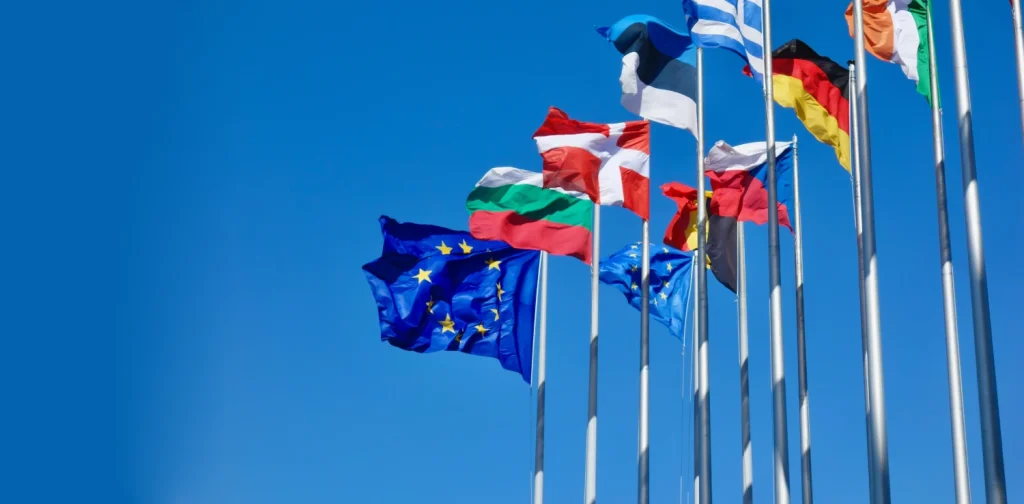
Photo: Antoine Schibler on Unsplash.
The current trajectory of climate change and inequality came into being due to the pursuit of development without regards to people and the planet. Without learning this lesson and transitioning away from business-as-usual, course-correction is impossible. In March 2026, the European Commission issued a proposal for the Industrial Accelerator Act (IAA). While the proposal reflects positive ambitions, it has also raised concerns regarding its potential implications for trade relations, the expansion of interventionist industrial policies, and climate governance.
Overview of the Industrial Accelerator Act
The Industrial Accelerator Act (IAA) was initially introduced in February 2025 as part of the Clean Industrial Deal under the title “Industrial Decarbonization Accelerator Act”. The policy was designed to support both decarbonization and competitiveness in Europe’s energy-intensive industries. However, the European Commission later decided to remove the term “Decarbonization” from the policy’s title, despite still presenting decarbonization as one of its primary objectives.
After several delays, the European Commission finally released the official proposal of IAA on March 4, 2026. The IAA is intended to support low-carbon manufacturing in Europe, accelerate industrial decarbonization, and restrict strategic investments by foreign manufacturing companies. The proposal grants member states the flexibility to restrict foreign investments exceeding €100 million in strategic sectors such as batteries, electric vehicles, photovoltaics, and critical raw materials, particularly when the investing companies account for more than 40% of global production capacity.
IAA and Carbon Emissions
According to the European Commission, the policies outlined in the IAA could significantly reduce carbon emissions. By 2030, these measures are estimated to curb approximately 30.6 million tonnes of CO2 by promoting demand for low-emission materials. This reduction is equivalent to more than €3 billion in avoided climate-related costs.
In addition to boosting demand for low-emission materials, the IAA also aims to accelerate decarbonization projects by streamlining industrial permitting processes and increasing investment in low-emission technologies. This approach should address a structural issue in Europe’s industrial transition, where emission reductions have often resulted from declining production rather than improvements in carbon efficiency.
The Broader Global Strategy
The IAA also reflects a broader global strategy. The proposal appears aimed, in part, at addressing China’s dominant position in the green technology sector, where Chinese firms benefit from substantial production capacity and lower production costs. Additionally, the IAA emerges in response to the United States of America (USA) policies that provide substantial subsidies for green technologies and incentivize companies to manufacture within the USA.
Instruments such as requirements for European companies to hold majority stakes, technology transfer provisions, integration into European value chains, and job creation are key components of the IAA’s strategic framework. In practice, these measures require foreign companies to establish joint ventures with European firms in order to operate, ensuring that the foreign investment remains possible while strategic control over key industries is retained within the European Union (EU).
Criticisms and Concerns Surrounding the IAA
The proposal has drawn criticism from various stakeholders, many of whom view the IAA as a misguided attempt to reshape Europe’s industrial landscape. A central concern is its narrow sectoral focus. The policy targets heavy industrial products such as steel, aluminum, cement, and electric vehicles. However, it provides almost no direct support for the chemical industry, which is highly carbon-intensive and underpins many other production sectors. The copper industry has also been largely overlooked, despite its critical role in enabling the energy transition and supporting an electrified economy.
From an economic and global trade perspective, the IAA also faces criticism. The EU has long been regarded as a strong supporter of free trade, rules-based international trade, and multilateralism. However, the introduction of the proposal has raised questions about the EU’s credibility in this role, as the policy has been viewed by some as protectionist. In a landscape rife with widening divides, the IAA risks signaling the bloc’s step away from global collaboration and cooperation.
Environmental groups have also raised concerns that the IAA places greater emphasis on strengthening the bloc’s competitiveness than on advancing climate objectives. According to these groups, the IAA requires clearer and more stringent regulations. For example, the act introduces a 25% low-carbon requirement for steel procurement. Critics argue that this threshold is too low, as approximately 45% of steel production in Europe already relies on lower-emission technologies. As a result, the 25% quota largely reflects the status quo rather than driving meaningful transformation.
Remaining Challenges and Future Directions
One foundational issue that has received relatively little attention in the debate surrounding the IAA is the sourcing of raw materials required for clean energy technologies. The expansion of domestic manufacturing of batteries, electric vehicles, and other net-zero technologies will inevitably increase demand for critical minerals such as lithium, cobalt, and rare earth elements. However, the EU largely depends on imports for this resource.
On that note, the supply chains for these minerals are often associated with natural resource and labor exploitation. Without proper provision mechanisms, the IAA risks worsening the existing unjust and unsustainable practices that disproportionately harm the Global South for the benefit of the Global North. Ensuring that the industrial transition driven by the IAA does not exacerbate these issues will remain a critical challenge.
Ultimately, economic advancement must no longer take precedence over sustainable development that leaves no one behind. Balancing those aspects will therefore be essential for ensuring that the IAA contributes effectively to the EU’s economic development, Europe’s decarbonization goals, and the stability of global trading systems.
Editor: Nazalea Kusuma

Co-create positive impact for people and the planet.
Amidst today’s increasingly complex global challenges, equipping yourself, team, and communities with interdisciplinary and cross-sectoral insights on sustainability-related issues and sustainable development is no longer optional — it is a strategic necessity to stay ahead and stay relevant.
 Noise Pollution Is Making Us Sick, and Climate Change Is Making It Worse
  Beyond Fashion: The Environmental Cost Behind Animal Leather
  Addressing the Hidden Risk of Microplastics from Offshore Infrastructures
  Addressing Antimicrobial Resistance as More Than a Medical Issue
  Holding Harmful Industries Liable for Harm to Human Life and the Environment
  Clearing the Air of Despair Surrounding the Climate Crisis with Data