

The Right to Be Cold and What It Means for Indigenous Inuit
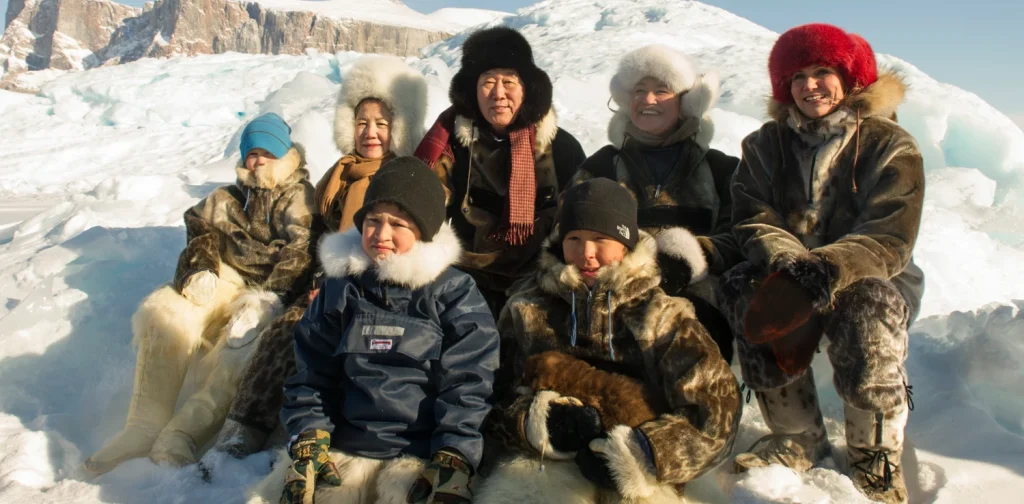
Photo: United Nations Photo on Flickr.
Climate change triggers widespread catastrophe, from rising temperatures to melting glaciers. While this change poses risks to our lives, some communities feel it more than others, and it threatens their way of life. Among them are the Indigenous people of the Arctic, who experience loss of cultural, social, and economic systems due to the loss of cold. In this light, the “Right to be Cold” is being actively promoted to safeguard their way of life.
Why Cold Matters
For the Inuit, Indigenous people of the Arctic, cold is a fundamental part of their daily lives. The ice serves as a stable platform for snowmobiles and sleds, as well as for hunting and fishing. Importantly, the icy landscape serves as a space for social gatherings and the transfer of knowledge on traditional practices. Research in the Indigenous area of Nunatsiavut interviewing the local community found that sea ice influences individual and collective health positively, mostly related to mental, emotional, spiritual, social, and cultural wellbeing.
However, the worrying trend of increasing global temperature puts the Arctic environment at risk. Since 1979, the Arctic has been warming four times faster than the rest of the world; some areas are even warming up to seven times faster. Ice sheets are getting thinner and slowly disappearing, making access to food sources more challenging and unsafe. The decline in hunting, for example, may reduce food availability and increase the need for a non-local diet. Thus, the risk of food insecurity becomes higher.
Furthermore, the shift in landscape also disrupts the intergenerational transfer of knowledge. The changing environment due to ice loss means natural indicators of ice safety become increasingly inaccurate, and traditional knowledge becomes less applicable.
In Pangnirtung, for instance, experienced hunters report that traditional knowledge of ice thickness, once reliable for generations, is no longer sufficient to ensure safety. Thinner and more unstable ice has led to fatal accidents among younger hunters attempting to sustain traditional practices. Similarly, in Shishmaref, coastal erosion driven by thawing permafrost has forced entire communities to consider relocation, as shorelines recede by several meters each year.
The Right to be Cold
The interrelated nature of human and environmental wellbeing signals that addressing climate change must involve a human rights lens. This includes the right to be cold as well.
The concept of the “Right to be Cold” was popularized by Sheila Watt-Cloutier, an Inuit activist. The right to be cold highlights that a stable cold environment is essential in maintaining food security, mobility, health, and the continuation of culture and traditions. Therefore, losing the cold means losing a functional living system.
The advocacy for the right to be cold dates back to 2005 when the Inuit Circumpolar Council (ICC) submitted a petition to the Inter-American Commission on Human Rights, stating that greenhouse gas emissions from industrialized nations have been posing harm to the human rights of the Inuit communities.
Over time, the concept evolved in international frameworks. The United Nations Declaration on the Rights of Indigenous Peoples (UNDRIP), for instance, recognizes the rights of Indigenous people to protect and maintain their traditional land. In March 2026, the Office of the UN High Commissioner for Human Rights (OHCHR) recognized that the loss of sea ice in the Arctic threatens the Inuit’s right to property, culture, and self-determination.
Safeguarding Indigenous Rights
Communities contributing the least to global emissions are often affected the most in our warming world. Therefore, climate change needs to be addressed through an equity and justice-based approach. A stronger legal framework at the international and national levels can serve as a necessary foundation for strengthening the protection of Indigenous communities everywhere. This legal recognition is fundamental to safeguarding Indigenous rights and lands and ensuring their autonomy, and must be respected by all parties once enacted.
At the same time, climate action must be at the heart of development efforts and business activities worldwide, ensuring that those who are most vulnerable are taken into account. All in all, the continuity of Indigenous knowledge and cultural survival is essential for building a sustainable future for all.
Editor: Kresentia Madina

Co-create positive impact for people and the planet.
Amidst today’s increasingly complex global challenges, equipping yourself, team, and communities with interdisciplinary and cross-sectoral insights on sustainability-related issues and sustainable development is no longer optional — it is a strategic necessity to stay ahead and stay relevant.
 We May Surpass 1.5°C Soon, But We Can Do Something About It
  From European Heat to the Himalayan Flood: The Transboundary Nature of Climate Risk
  Noise Pollution Is Making Us Sick, and Climate Change Is Making It Worse
  Beyond Fashion: The Environmental Cost Behind Animal Leather
  Addressing the Hidden Risk of Microplastics from Offshore Infrastructures
  Addressing Antimicrobial Resistance as More Than a Medical Issue