

Green Burnout: Sustainability Workers and Climate Activists Are Quietly Falling Apart
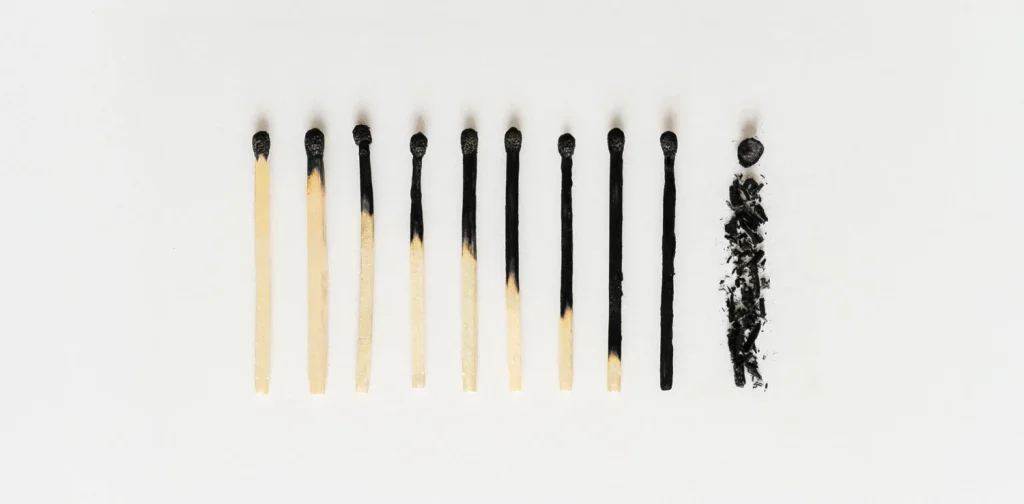
Photo: Christopher Welsch Leveroni on Pexels.
There is an uncomfortable irony at the heart of the sustainability sector. Amidst rapidly changing landscapes, the professionals dedicating their careers to building a healthier world are themselves quietly breaking down. Green burnout, a form of occupational exhaustion specific to those engaged in climate and environmental work, is spreading through the sustainability workforce.
Green Burnout Amidst the Changing World
A study from 2024 conducted by Oxford Brookes Business School found that 62% of sustainability professionals experienced burnout related to their work over the past year. Concerningly, 69% reported that their organizations were not adequately equipping them with the skills to cope. Meanwhile, a 2025 study examining disengagement among climate activists within the Extinction Rebellion identified burnout as one of the three core themes.
These are not numbers from a struggling fringe. They represent the mainstream of a sector the world is counting on to deliver change.
Climate scientists and activists are likely to experience severe burnout and despair about the lack of progress toward sustainability, alongside eco-grief and anxiety. Their condition stems from witnessing environmental destruction unfold in real time around the world. For those doing this work professionally, that emotional exposure is not occasional. It is the daily backdrop of every assignment, meeting, report, and deadline.
Distinct, Yet Familiar
Green burnout carries a distinct profile from general workplace stress and burnout. More likely, it resembles something the activism and NGO world has been grappling with. Research published in 2025 in the journal Healthcare found that activist burnout in climate justice contexts bears close similarity to burnout in the helping professions, with stress and cynicism building over time until individuals reach a breaking point.
Nonprofit and NGO workers consistently rank among the most burned-out professionals globally. In fact, they topped sector burnout charts both in 2019 and again in 2025. The Center for Effective Philanthropy’s State of Nonprofits 2024 report found that 95% of nonprofit leaders were concerned about staff burnout. In fact, 75% said it was already impacting their organization’s ability to achieve its mission.
As the planet gets hotter and climate change impacts worsen, green burnout is no surprise. The pressures are rising, and sustainability workers are in constant exposure to eco-grief and eco-anxiety triggers. They are grappling with the sense that they cannot move the needle in time while bearing the existential weight of working on a crisis with no clear finish line.
The Structural Problems Behind the Personal Toll
Activists and NGO workers admit to several reasons among their burnout and, eventually, disengagement. They have mentioned underpayment, understaffing, emotionally demanding work, and a gap between the urgency of the mission and the resources available to carry it out.
Among nonprofit leaders who flagged burnout as their top concern, 62% cited funding challenges and increasing demand for services as the two key drivers behind the crisis. They are expanding in public importance and shrinking in internal support simultaneously.
Sustainability workers are operating inside the same structural reality. More than six in ten sustainability professionals reported experiencing burnout within the year. The survey identified understaffing and a lack of support for developing critical skills identified as the primary drivers. The sector is being asked to do more with fewer people and less emotional scaffolding than the work demands.
However, green burnout goes even deeper. Beyond workload and support, green burnout is also driven by isolation. Day by day, climate activists and sustainability professionals work carrying the sense that the systems they are working within are fundamentally misaligned with the urgency of the problem.
Addressing Green Burnout
The sustainability sector cannot afford to keep burning through the people trying to create a better world for people and the planet. The work is too urgent and the talent too scarce to treat green burnout as anything less than a structural crisis.
Practitioners in the nonprofit space underscore that burnout thrives in isolation. So, they recommend connection to peers and leadership that can interrupt its escalation before it reaches the point of departure. They point specifically toward peer debriefing spaces and proactive manager check-ins as meaningful interventions.
Research from Harvard Business School reinforces this. It highlights how psychological safety, the ability of workers to speak up without fear of retribution, is one of the most powerful buffers against burnout. This is particularly true in high-pressure environments operating under resource constraints.
Additionally, the Yale Program on Climate Change Communication recommends actively prioritizing the mental health of workers in sustainability-related organizations. This includes building structures that allow negative emotions to be acknowledged rather than suppressed and fostering community as a core organizational practice rather than a side benefit.
Ultimately, placing all the burden on individual workers to adapt their way through an unsustainable situation does not work. Organizations need to build the conditions that make sustained engagement possible, helping each other toward a better future for all.
Editor: Nazalea Kusuma

Co-create positive impact for people and the planet.
Amidst today’s increasingly complex global challenges, equipping yourself, team, and communities with interdisciplinary and cross-sectoral insights on sustainability-related issues and sustainable development is no longer optional — it is a strategic necessity to stay ahead and stay relevant.
 Whimsymaxxing and Beyond: Rethinking the Waste Behind Viral Trends
  Seeking Guidance from Karl Marx to Face the Climate Catastrophe
  Indonesia’s Greenwashing Diplomacy at COP31 and Beyond
  The Textile Industry Is Growing, and So Is Textile Wastewater
  EESG: We Need a New Economic Narrative for Sustainability in the Age of AI, Energy Crisis, and Geopolitical Divide
  The Continued Struggle for Equality and Dignity in Women’s Sportswear