

Developing Pakistan’s National Bamboo Strategy
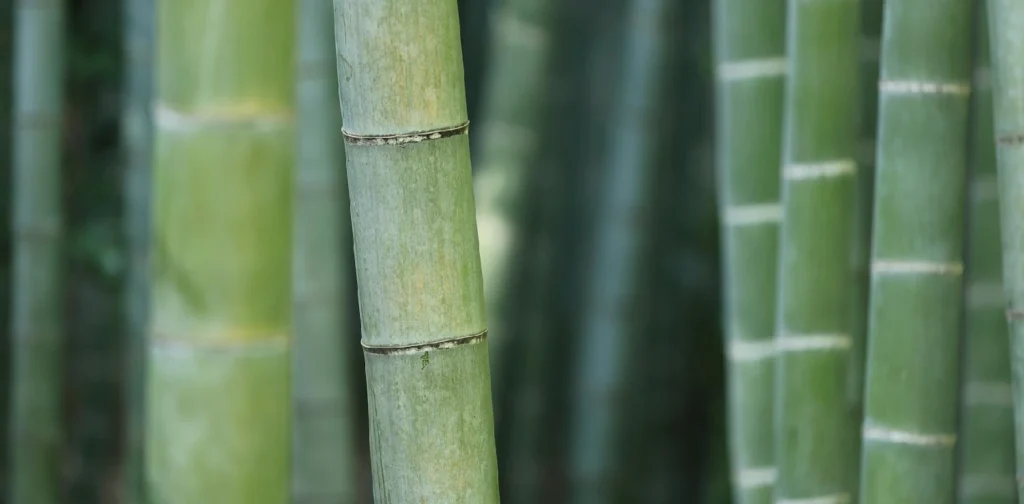
Photo: kazuend on Unsplash.
As the call for sustainable consumption and production gets more urgent, some industrial processes have begun using more sustainable and renewable materials. One of them is bamboo, and its development has grown over the years. In Pakistan, the government is developing a National Bamboo Strategy to strengthen the utilization and management of bamboo to contribute to the country’s economic, social, and environmental goals.
A Rising Star
There are approximately 1,200 species of bamboo in the world. The plant is quick to grow, and some species can reach as high as 35 meters and as wide as 30 centimeters.
Bamboo has been used as a versatile material for centuries in some regions. However, in recent years, it has been more widely utilized due to its economic and environmental values. Bamboo’s wood-like textures make it an excellent substitute for wood in furniture, fabric, and paper productions. It is relatively lightweight, meaning that bamboo is easier to harvest, transport, and handle without needing special equipment. Culturally, bamboo also holds significance among Indigenous Peoples across the globe.
National Bamboo Strategy
Pakistan has three native bamboo species, and people have been extensively utilizing them for construction and woven products. Moreover, in light of the country’s high disaster level, bamboo is also used to build transitional and permanent shelters during earthquakes and floods. One example is the Heritage Foundation Pakistan, a non-profit organization that uses sustainable architecture principles to help disaster victims rebuild homes using low-cost and low-carbon materials.
To fully harness bamboo’s potential while remaining responsible for its resources, the government of Pakistan is developing the National Bamboo Strategy. The strategy aims to promote sustainable bamboo development as part of the country’s broader environmental and economic goals.
The government held a two-day workshop to finalize the National Bamboo Strategy in October 2024. It was in collaboration with the International Network on Bamboo and Rattan (INBAR) and the International Union for Conservation of Nature (IUCN).
During the workshop, Professor Lu Wenming, the Deputy Director General of INBAR, highlighted how bamboo can be a key driver in addressing climate change and building livelihoods simultaneously. Meanwhile, Mahmood Akhtar Cheema, the Country Representative of IUCN Pakistan, underscored how Pakistan has the necessary land and climate for bamboo cultivation, which can act as an effective soil binder for erosion control.
Further Research Needed
When implemented, Pakistan’s National Bamboo Strategy is hoped to contribute to the country’s economic, social, and environmental goals, in line with the UN’s Sustainable Development Goals. Syed Ghulam Qadir Shah, Chair and Member Coordination of Pakistan’s Climate Change Authority, emphasized the urgency for research-based decision-making to open the door for bamboo’s future in Pakistan. Conducting pilot projects to determine suitable species and locations for bamboo development can mark a strong start in sustainable bamboo management in the country.
Editor: Nazalea Kusuma

Kresentia Madina
Madina is the Assistant Manager of Stakeholder Engagement at Green Network Asia. She holds a bachelor’s degree in English Studies from Universitas Indonesia. As part of the GNA In-House Team, she supports the organization's multi-stakeholder engagement across international organizations, governments, businesses, civil society, and grassroots communities through digital publications, events, capacity building, and research.
 Unpacking SBTi’s Corporate Net-Zero Standard V2.0: Balancing Science and Business Realities
  Farmer Loneliness, the Overlooked Mental Health Crisis Within the Food System
  Conservation Paradox: Managing the Overabundance of Endangered Koalas in South Australia
  Green Burnout: Sustainability Workers and Climate Activists Are Quietly Falling Apart
  The Warning Signals of Climate Change
  How Land Use and Climate Change Shape the Increasingly Precarious Balance of Global Deadwood Stocks