

Assessing Climate Risks in Australia
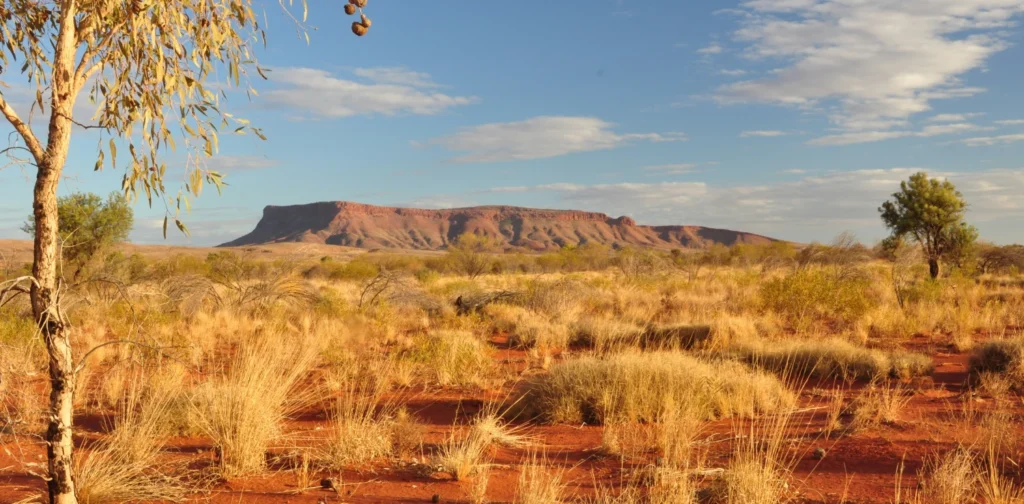
Photo: Tony McLachlan on Unsplash.
Climate change is one of the biggest challenges we face today. Understanding current risks and future implications is fundamental to formulating mitigation and adaptation strategies. In its first National Climate Risk Assessment, Australia identifies priority climate risks, consequences, and actions necessary to face climate change.
Climate Risks in Australia
Limiting global temperature rise to below 1.5 ºC has been a global goal since the adoption of the Paris Agreement in 2015. From phasing out coal plants to utilizing renewable energy sources, countries have been deploying various methods to reduce greenhouse gas emissions. Yet, climate change seems to show no sign of slowing down, with 2023 and 2024 breaking records as the hottest years on record consecutively.
As risks continue to escalate, assessing priority areas and future implications becomes urgent to develop response mechanisms. Australia’s National Climate Risk Assessment, published in September 2025, highlights 11 priority hazards the nation faces in relation to climate change.
One of the headlines is extreme temperatures. The report predicts that temperatures will increase, particularly in northern Australia and desert regions. Severe and extreme heatwave days are projected to double from the current four to nine days under the global warming levels of +2.0 ºC, and will quadruple under the +3.0 ºC levels. Consequently, higher temperatures and drier conditions will increase the risk of bushfires in forest areas.
Sea level rise is also highlighted as a severe climate risk in Australia, where it is projected to increase by approximately 50 centimeters by the end of the century. This increase will trigger more coastal flood events as well as coastal erosion and shoreline changes. The report states that by 2090, coastal erosion may occur 10 times more frequently than it does now. Furthermore, there are also the threats of ocean acidification and marine heatwaves, which are particularly detrimental to marine ecosystems.
Severe Implications
The report further identifies the impacts of these hazards on Australia’s key functional systems on current and future timelines. Of the eight listed systems, the natural environment and health & social support are the two aspects projected to face severe climate risks by 2050.
The natural environment bears the brunt of climate change and will likely collapse in the future if the pressure increases. In 2025, the Great Barrier Reef experienced its sixth mass coral bleaching event due to warming oceans. Frequent extreme weather events, compounded by other threats like invasive species, can further lower biodiversity’s resilience and diminish ecosystem services.
Meanwhile, severe climate risks will put a heavier burden on the healthcare systems. Prolonged and extreme heatwaves could cause more heat-related deaths, and increasing temperatures can trigger more vector-borne diseases like dengue fever. Additionally, more bushfires will aggravate air pollution, which significantly affects human and planetary health.
Adapting to the Crisis
Along with the climate risk assessment, the Australian government has also published the National Adaptation Plan that sets out the government’s strategies in responding to the identified risks. The government states that the actions will be implemented in accordance with the principles of targeted, evidence-based, and collaborative approaches.
Throughout the adaptation plan, the government also highlights several priority national strategies and plans relevant to addressing climate risks. Among them are the 2022–2032 Threatened Species Action Plan, which aims to strengthen the resilience of threatened species, and the National Health and Climate Strategy, which addresses the health impacts of climate change. Working with governments at all levels and inviting participation from businesses and civil society will be a crucial step to advance Australia’s adaptation plans to mitigate climate risks, for today and the future.
Editor: Nazalea Kusuma
 Looking into the Inadequate Legal Recognition for Women’s Tenure Rights Across the Global South
  The Disproportionate Cost of Data Centers for Local Communities
  Will the EU Ban on Destroying Unsold Clothes Reduce Textile Waste?
  How Extreme Heat Affects Human Livability
  Looking into Green Ramadan Initiatives Worldwide
  The Widespread Impacts of Severe Drought in Somalia