

ADB-Lao PDR New Partnership for Economic Resilience
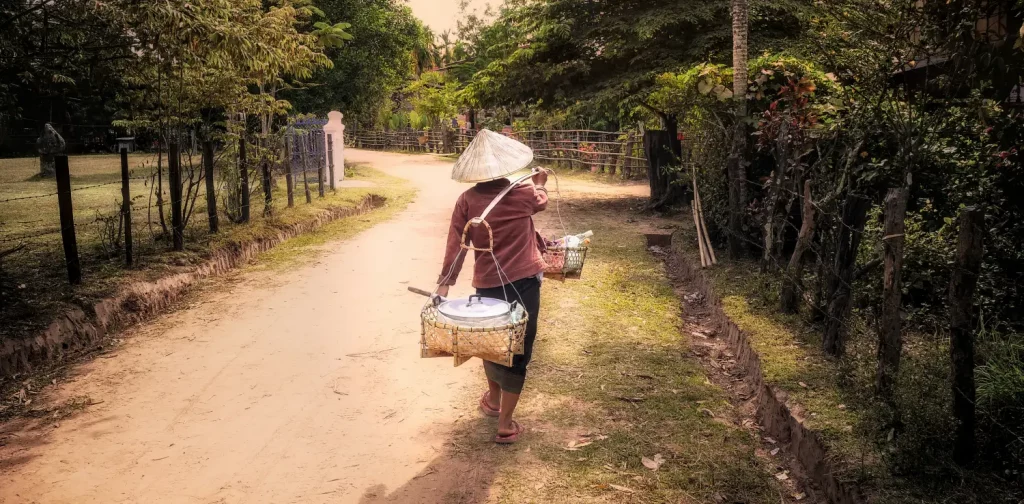
Photo: Simon Berger on Unsplash.
Lao People’s Democratic Republic (Lao PDR) is a small, landlocked Southeast Asian country rich with natural resources and renewable energy potential. However, it also has a fragile economy. The Asian Development Bank (ADB) recently launched a five-year partnership strategy for Lao PDR to support its economic resilience.
Lao PDR’s Economic Resilience
Lao PDR is home to over seven million people. The country has shown significant economic growth in the last two decades due to large-scale investments, particularly in mining, hydropower, and transport. The growth is noted by factors such as achieving near-universal access to electricity and improving primary education completion rates.
However, despite the growth, Lao PDR struggles with job creation, mounting debt, and climate risks. The impacts of the COVID-19 pandemic caused income and job losses equal to 5% of GDP in 2022, along with tourism collapse and declining demand for exports. Furthermore, macroeconomic imbalances, such as high inflation and rising public debt, also add to the country’s economic fragility.
Economic resilience is central to a country’s journey to sustainable development. In March 2024, the Asian Development Bank (ADB) launched a new country partnership strategy for Lao PDR. The strategy will span five years, from 2024 to 2028, to build a stronger foundation for a more inclusive, sustainable, and resilient economy in the country.
ADB Country Strategic Partnership
For this new strategy, ADB aims to promote sustainable public finance, enable equitable access to service, and advance climate commitments. The strategy will also cover various cross-cutting aspects, such as gender equality, governance, resilience against disasters, and regional cooperation.
“In collaboration with the government, our strategy is designed to help the Lao PDR navigate economic and financial challenges to build a more inclusive and sustainable future, emphasizing the importance of macroeconomic stability, enhanced service delivery, and climate resilience as pillars of our cooperation,” said ADB Vice-President for East and Southeast Asia, and the Pacific Scott Morris.
To tackle debt and promote sustainable public finance, ADB will collaborate with the International Monetary Fund (IMF) and the World Bank to strengthen policy actions, develop private sector engagement, and reform debt management. The bank also aims to support initiatives that address healthcare and education deficiencies, respond to food insecurity, and improve financial access for SMEs.
Furthermore, the strategy plans to advance climate commitments in the climate sector through investment and knowledge support in agriculture, natural resource management, pollution and waste management, and disaster risk management.
Strong Foundation for Sustainable Development
The economy is one of the critical pillars of sustainable development. A strong and resilient economy will allow countries to mobilize necessary resources to improve and accelerate actions for sustainable development across social, environmental, cultural, and other aspects. By aligning the strategy to Lao PDR’s national goals, commitments, and strategies and building on previous partnerships, ADB’s new country partnership strategy will hopefully accelerate and strengthen economic resilience in Lao PDR.
Editor: Nazalea Kusuma

Kresentia Madina
Madina is the Assistant Manager of Stakeholder Engagement at Green Network Asia. She holds a bachelor’s degree in English Studies from Universitas Indonesia. As part of the GNA In-House Team, she supports the organization's multi-stakeholder engagement across international organizations, governments, businesses, civil society, and grassroots communities through digital publications, events, capacity building, and research.
 Africa’s Solar Energy Surge: Why 2025 Was a Breakthrough Year
  Agrihoods: Integrating Farms and Urban Neighborhoods into Sustainable Communities
  Women in Waste Management: Asia’s Circularity Runs on Women. Its Policies Still Don’t
  Embracing the Business Value of Sustainability
  American Farmers Call for Government Support Amidst PFAS Contamination
  Asia Pacific’s SDG Progress Faces Major Setbacks