

Better Infrastructure and Systems Needed for Textile Recycling
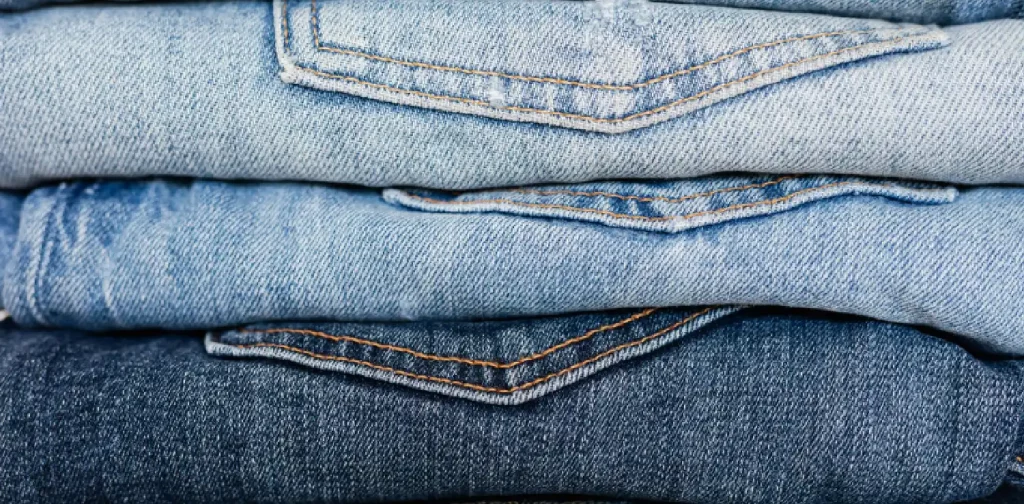
Photo: Karolina Grabowska on Pexels.
Where do all of our unused clothes go? For those with decent qualities, donation or secondhand shops might be an option. However, the majority of our fashion waste still goes to landfills. In this light, better infrastructure and systems are needed to support textile recycling.
Concerns over fashion waste
Billions of pieces of clothing are produced every year. While there is no exact number for garment production, available data suggests that the number ranges between 80 and 150 billion. Rapid trend changes have exacerbated the mass production of low-cost, low-quality fashion items—commonly known as fast fashion.
Fashion waste is a pressing yet challenging issue to tackle. Approximately 92 million tonnes of textile waste go to landfills every year, creating massive piles of waste mountains like the ones in the Atacama Desert, Chile. This piled-up waste will take too long to decompose, and incinerating it will cause air pollution that can harm the surrounding environment.
Textile recycling practices
Textile recycling refers to taking existing fabrics, materials, and fibers to create new products. It is an essential aspect of the fashion circularity movement, which seeks to create a closed-loop fashion system, minimize waste, and support sustainable fashion.
Many initiatives, big and small, have been implemented to support textile recycling worldwide. In their article, reporter Sarah Johnson highlighted four entrepreneurial people who turned fashion waste into shoes, rugs, and garments. These people came from Ghana, Pakistan, and Chile, where fashion waste is a pressing issue.
“I was walking through Kantamanto market, a secondhand clothes market in Accra, in 2017, when I saw some sportswear with cigarette burns on the floor. I saw more and more clothes on the floor and felt frustrated,” said Yayra Agbofah from Ghana, as reported by Johnson. Agbofah then founded The Revival, a non-profit organization focusing on upcycling the global textile waste sent to Ghana.
On the other hand, businesses and organizations are also crucial in encouraging textile recycling. In Australia, the non-profit organization Australian Fashion Council established the National Clothing Product Stewardship Scheme aiming for fashion circularity by 2030. Then, the textile waste management firm Reverse Resources and the National Textile University in Pakistan have recently partnered to revamp the country’s textile-to-textile ecosystem by establishing a framework for textile waste supply and demand.
Another example is SuperCircle, a tech-based startup that aims to be a connecting platform between key actors in the fashion and retail industry and bridge the gap in textile recycling and circularity.
Better infrastructure and systems needed
Although many efforts have been made in many parts of the world, textile recycling remains challenging due to its many limitations. The lack of connecting infrastructure between garment manufacturers, fashion brands, and waste management actors has been hindering the progress of circular fashion.
In an interview with Textile Exchange, the SuperCircle team also noted a lack of awareness and education on circularity as the top barrier for the startup. “This education gap is understandable—the circular supply chain is new and complicated, which requires a lot of education and reorientation for brands and sustainability leads,” said the team.
These challenges indicate that advancing textile recycling requires better infrastructure, systems, and regulations. In this case, government and policymakers’ roles are especially crucial in building enabling environments for key actors in the fashion industry to transition toward better practices. This includes establishing strict sustainability regulations on circular fashion. Furthermore, beyond recycling, producers and consumers must participate in changing the overall production and consumption pattern in fashion through efforts such as designing garments that are made-to-last and reducing consumption to the essentials.
Ultimately, the shift to a more long-lasting, sustainable, and circular practice in fashion requires a collaborative effort to create systemic change for all.
Editor: Nazalea Kusuma

Kresentia Madina
Madina is the Assistant Manager of Stakeholder Engagement at Green Network Asia. She holds a bachelor’s degree in English Studies from Universitas Indonesia. As part of the GNA In-House Team, she supports the organization's multi-stakeholder engagement across international organizations, governments, businesses, civil society, and grassroots communities through digital publications, events, capacity building, and research.
 Impacts of E-waste Pollution on Animals and Human Health
  Africa’s Solar Energy Surge: Why 2025 Was a Breakthrough Year
  Agrihoods: Integrating Farms and Urban Neighborhoods into Sustainable Communities
  Women in Waste Management: Asia’s Circularity Runs on Women. Its Policies Still Don’t
  Embracing the Business Value of Sustainability
  American Farmers Call for Government Support Amidst PFAS Contamination