

Decent Work and Rights Protection for Arts and Entertainment Workers
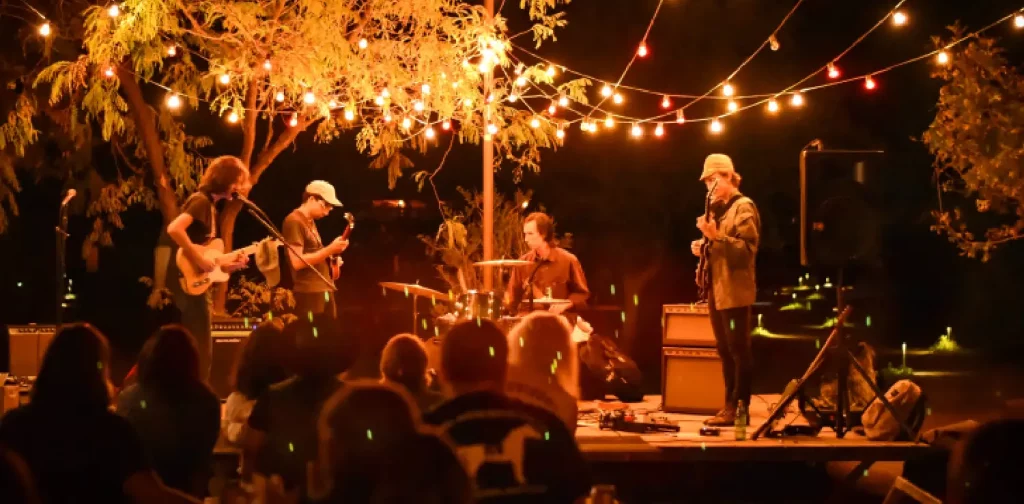
Photo: Martin Robles on Unsplash.
Films, music, and stories are part of our everyday joy. Beyond the source of entertainment, arts, in all its forms, can influence our mental and physical well-being and even cultivate global movements in the name of humanity. However, arts and entertainment workers often get into a vulnerable state due to the informal nature of their work.
Informality & vulnerability
The arts and entertainment sector has developed tremendously throughout the years. As technology advances and people get more creative, almost everyone can generate income through streaming-based online platforms and e-commerce. While this means increased job opportunities, these jobs often lack formality and a proper system.
Workers in the arts and entertainment industry often operate on a gig basis, resulting in irregular income. Inadequate remuneration systems, limited access to social protection, and unclear work agreements also explain why the workers in this sector are vulnerable to exploitation and uncertainty.
Ensuring a safe and healthy environment for arts and entertainment workers requires implementing regulations and enforcement to provide the foundation of decent work in the arts and entertainment sector.
Supporting arts and entertainment workers
The recent COVID-19 pandemic has disrupted in-person performances, exhibitions, and concerts everywhere due to mobility restrictions. Therefore, the arts and entertainment sector needs to build long-term and sustainable strategies to create decent jobs, provide social protection, and practice a responsible and environmentally conscious economy.
The International Labour Organization (ILO) recently hosted a technical meeting discussing the future work in the arts and entertainment sector. The meeting took place from 13-17 February and was attended by representatives from governments and employers’ and workers’ organizations.
At the end of the session, several recommendations were adopted as the next course of action. The complete list can be found in the summary, but several recommendations are as follows:
- Governments should adopt, implement, and effectively enforce national laws and regulations to ensure arts and entertainment workers’ fundamental rights at work are applied.
- In cooperation with employers’ and workers’ organizations, governments should enable an environment for effective social dialogues, ensure robust labor inspection systems, and implement regulations related to adequate minimum wage.
- The ILO should share good practices, conduct research, and provide guidance on social protection, technology impacts, employment-creation potential, and required skills in the arts and entertainment sector.
Ultimately, providing decent work for all workers is essential for their livelihoods. Implementing clear employment regulations with adequate, regular income and comprehensive social protection can help arts and entertainment workers gain a better footing to continue living a healthy, safe, decent life.
Editor: Nazalea Kusuma

Co-create positive impact for people and the planet.
Amidst today’s increasingly complex global challenges, equipping yourself, team, and communities with interdisciplinary and cross-sectoral insights on sustainability-related issues and sustainable development is no longer optional — it is a strategic necessity to stay ahead and stay relevant.

Kresentia Madina
Madina is the Assistant Manager of Stakeholder Engagement at Green Network Asia. She holds a bachelor’s degree in English Studies from Universitas Indonesia. As part of the GNA In-House Team, she supports the organization's multi-stakeholder engagement across international organizations, governments, businesses, civil society, and grassroots communities through digital publications, events, capacity building, and research.
 India’s Supreme Court Declared Menstrual Health and Hygiene as Fundamental Rights
  Impacts of E-waste Pollution on Animals and Human Health
  Africa’s Solar Energy Surge: Why 2025 Was a Breakthrough Year
  Agrihoods: Integrating Farms and Urban Neighborhoods into Sustainable Communities
  Women in Waste Management: Asia’s Circularity Runs on Women. Its Policies Still Don’t
  Embracing the Business Value of Sustainability