

Remobilization Call for the 2030 Education Agenda
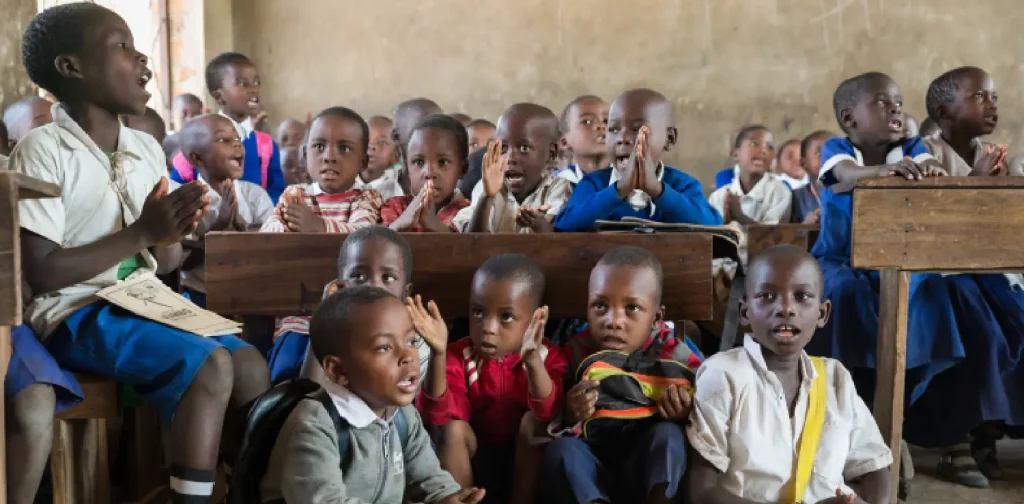
Photo: Kelley Lynch on Flickr
Everyone has a right to education, but reality remains far from the ideal. In 2022, more than 140 countries came together at the “Transforming Education Summit” to set commitments to accelerate the 2030 education agenda. Yet, recent findings from UNESCO show insufficient development, emphasizing the urgent need for remobilization to secure the future of millions of children.
Global Education
UNESCO has revealed a troubling increase in the number of children missing out on schooling, rising by six million to a total of 250 million. Besides a global stagnation in education, this surge is also attributed partly to the exclusion of women and girls from education in Afghanistan. These findings underscore a setback in achieving the UN Sustainable Development Goal 4, which aims for quality education for all by 2030.
Despite commitments made by 141 Member States at the UN Transforming Education Summit, countries are falling behind on their national SDG 4 targets. The progress in primary and secondary education completion rates has been lacking, requiring accelerated efforts to enroll millions more children in early childhood education by 2030.
Insufficient Progress
The 2023 UNESCO Global Education Monitoring Report reveals that, since 2015, there has only been a modest increase of less than three percentage points, reaching 87%, in the number of children completing primary education. Meanwhile, the percentage of youth completing secondary education has seen a slight rise of less than five percentage points, reaching 58%.
Globally, there has been a minimal improvement of less than one percentage point in youth literacy rates. If nations were meeting their respective targets, an additional 6 million children would be attending preschool, and 58 million more children and adolescents would be enrolled in schools.
Furthermore, although teachers play a crucial role in delivering quality education, the global effort to ensure a sufficient number of qualified teachers in classrooms has been inconsistent. Sub-Saharan Africa, while demonstrating progress since 2015, continues to have the smallest proportion of trained teachers at all education levels. If countries are delivering within the objectives, more than 1.7 million qualified teachers would currently be instructing primary school students.
UNESCO’s Senior Education Analyst, Patrick Nkengne, highlighted the shortage of teachers in Africa. He said, “When a classroom welcomes more than 100 students instead of the about 50 students it was built for, or as opposed to a ratio of 40 to 50 students per teacher recommended by the norms and standards, it clearly shows a shortage. As the number of classes in this condition increases, the issue of shortage becomes acute”.
Remobilization of the 2030 Education Agenda
UNESCO Director-General Audrey Azoulay calls for an urgent remobilization to safeguard the future of millions of children. “In view of these results, the objective of quality education for all by 2030, set by the United Nations, risks not being achieved. We need a global mobilization to place education at the top of the international agenda,” said Azoulay.
Now more than ever, it is crucial to remobilize commitment and focus on concrete actions. The international community is urged to unite in a shared commitment to prioritize education, ensuring it remains a top global priority. This call to action signifies a collective responsibility to reinvigorate efforts, implement effective strategies, and rekindle the momentum required to achieve the ambitious objectives set forth in the 2030 education agenda.
Editor: Nazalea Kusuma
 Green Burnout: Sustainability Workers and Climate Activists Are Quietly Falling Apart
  The Warning Signals of Climate Change
  How Land Use and Climate Change Shape the Increasingly Precarious Balance of Global Deadwood Stocks
  The Injustice of Climate Finance: How Climate Change Is Draining Developing Nations
  The Need for One Health in Conservation
  Opportunities and Challenges in Implementing Biodiversity Credits for Biodiversity Financing in Indonesia