

Raising Global Awareness on International Mangrove Day
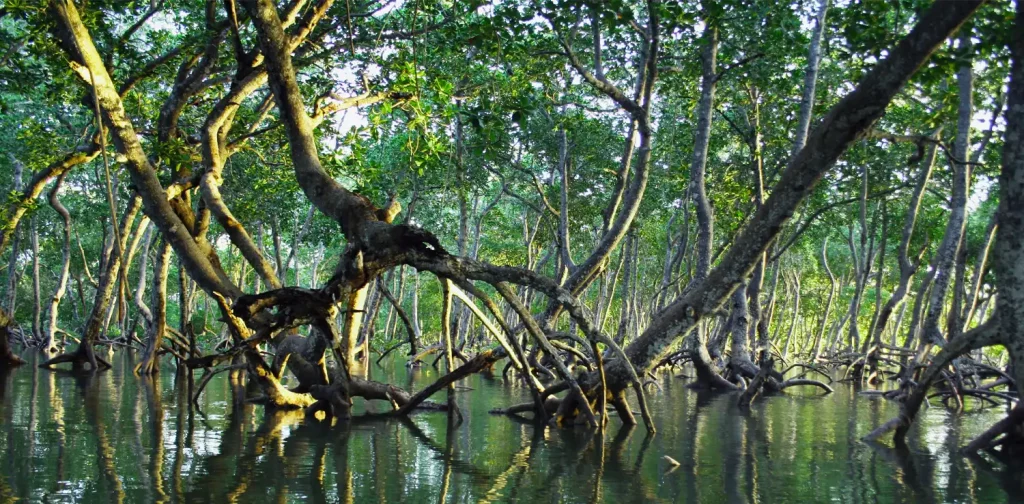
Photo by Timothy K on Unsplash
Most of the time, a picture perfect beach scene has palm trees in it. An unpopular yet essential component to beaches and coastal ecosystems is mangroves. Despite its importance, however, not many people are aware of mangrove’s benefits, let alone its slowly dying population and restoration attempts. To celebrate the International Day for the Conservation of the Mangrove Ecosystem on July 26, UNESCO published a series of educational posters on mangroves.
Mangrove and global awareness
Mangroves refer to the shrubs and trees that thrive in coastal areas, on the border between land and oceans. This unique plant can survive in saltwater, with its roots attached to the soil underwater despite poor oxygen.
According to UNESCO, mangroves cover 14.8 million hectares of the earth’s surface. There are currently 157 biosphere reserve sites in Asia and the Pacific, the second largest after Europe and North America.
Unfortunately, we are slowly losing our mangroves. From 1980-2005, the earth lost over 40% of its mangrove population due to coastal development, pollution, and aquaculture. Thus, through 125 educational posters, UNESCO wants people to recognize the importance of mangroves and commit to restoring them.
“This is the spirit of the exhibition we designed for the National Science Museum of Thailand and which is now being exported around the world, because it is also by showing and explaining the mysteries of mangroves that we will be able to preserve them sustainably,” said Audrey Azoulay, the Director-General of UNESCO.
Mangrove, benefits, and restorations
A mangrove forest provides an excellent home for coastal biodiversity. Many baby fish live between mangrove roots before moving into the bigger sea when they are older. These roots can also trap a large number of sediments, act as a shield against the sea waves, and prevent land erosion. Like its fellow plants, mangroves are also great decarbonization agents, holding 6.4 billion metric tons of carbon in 2000.
As the importance of marine sustainability is recognized, mangrove restoration attempts are also picking up. UNESCO is including mangroves in their restoration sites all over the world. In Thailand, for instance, mangrove forests exist in 5 Biosphere Reserves, 1 Global Geopark, and 5 World Heritage Sites. Local communities and researchers also play significant roles in saving mangroves.
Mangrove and sustainability
The deforestation of mangrove forests should not be overlooked. Through its first-ever comprehensive posters on mangroves worldwide, UNESCO hopes to raise global awareness on the importance of keeping our remaining mangrove forests healthy and thriving. As all lives on earth are intertwined, fostering healthy forests and healthy seas means one step forward to creating a sustainable future for humans, animals, and the earth.
Editor: Nazalea Kusuma

Co-create positive impact for people and the planet.
Amidst today’s increasingly complex global challenges, equipping yourself, team, and communities with interdisciplinary and cross-sectoral insights on sustainability-related issues and sustainable development is no longer optional — it is a strategic necessity to stay ahead and stay relevant.

Kresentia Madina
Madina is the Assistant Manager of Stakeholder Engagement at Green Network Asia. She holds a bachelor’s degree in English Studies from Universitas Indonesia. As part of the GNA In-House Team, she supports the organization's multi-stakeholder engagement across international organizations, governments, businesses, civil society, and grassroots communities through digital publications, events, capacity building, and research.
 India’s Supreme Court Declared Menstrual Health and Hygiene as Fundamental Rights
  Impacts of E-waste Pollution on Animals and Human Health
  Africa’s Solar Energy Surge: Why 2025 Was a Breakthrough Year
  Agrihoods: Integrating Farms and Urban Neighborhoods into Sustainable Communities
  Women in Waste Management: Asia’s Circularity Runs on Women. Its Policies Still Don’t
  Embracing the Business Value of Sustainability