

Seagrass Conservation Should Start Now
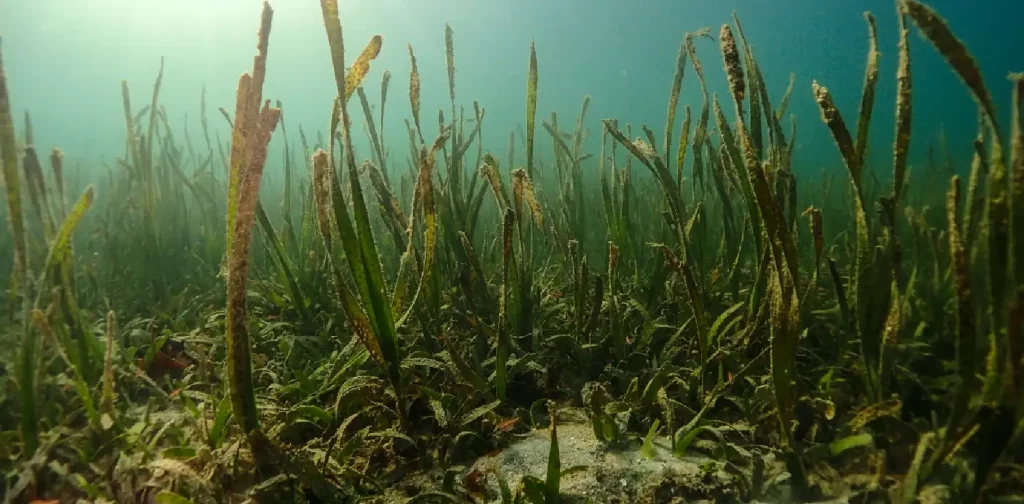
Photo: Benjamin L. Jones on Unsplash.
Life exists on land and below water. Unfortunately, both ecosystems are under the threat of environmental degradation. Seagrass meadows are one of the key habitats that are often overlooked in marine conservation efforts. As concern of warming earth arises, seagrass conservation becomes crucial.
The underwater plant
Seagrasses are the only flowering plants that can live underwater. It’s different from seaweed, which is a type of algae. Seagrasses live in shallow coastal waters, where they can form extensive underwater meadows. They cover at least 300,000 square kilometers of the ocean beds and are found in 159 countries except for the Antarctic continent.
Seagrass meadows are vital, not only for the marine ecosystems, but also for the lives on land. Big marine mammals such as manatees, dugongs, and green sea turtles use seagrass meadows as their primary foraging habitats. The meadows also provide vital nurseries for small fishes, protect coral reefs, and absorb harmful nutrients from the ocean.
For the lives on land, seagrass meadows prevent coastal erosion and store carbons. Even though covering only 0.1% of the ocean floor, they can store up to 18% of the world’s oceanic carbon, making them vital for reducing emissions.
Threats and dangers
Most of the marine life is concentrated in four key habitats: kelp forests, mangroves, seagrass meadows, and coral reefs. While all of them are equally vulnerable to crises, seagrass meadows are one of the least protected habitats. A report by UNEP stated that only 26% of seagrass meadows fall within marine protected areas, compared with 40% of coral reefs and 43% of mangroves.
The report further revealed that seagrass meadows have been declining since 1930. The most recent stats estimate that 7% of the meadows are lost worldwide annually, equivalent to losing a football field of seagrass every half hour. Agricultural and industrial run-off, coastal development, climate change, and unregulated fishing activities are cited as the major threats for the habitat.
One of the notable seagrass loss tragedies happened at the Shark Bay Marine Park, Australia. In 2011, the park lost 1,310 square kilometers of seagrass following an extreme marine heat wave. The heat wave occurred on the Western Australian coastline, increasing the water temperature up to 2-5°C warmer than average. The government recorded that the loss happened after the seagrass experienced an extreme sea temperature for long periods of time.
Seagrass conservation
Recently, scientists discovered the alarming ocean warming phenomenon. It is said to precede the El Niño, which can trigger intense marine heat waves. Now more than ever, protecting and conserving seagrass meadows is crucial.
Globally, seagrass conservation is included in the UN Decade on Ecosystem Restoration mission. The aforementioned UNEP report also presents several key recommendations for policymakers, including developing a comprehensive global map of seagrass distribution and health, recognizing seagrass protection in SDGs 2030 agenda and other international policy targets. It also includes increasing national, bilateral, and multilateral funding to undertake comprehensive conservation efforts. Other government bodies, researchers, communities, and organizations must also take part in seagrass conservation for marine life and also ours.
Editor: Nazalea Kusuma

Co-create positive impact for people and the planet.
Amidst today’s increasingly complex global challenges, equipping yourself, team, and communities with interdisciplinary and cross-sectoral insights on sustainability-related issues and sustainable development is no longer optional — it is a strategic necessity to stay ahead and stay relevant.

Kresentia Madina
Madina is the Assistant Manager of Stakeholder Engagement at Green Network Asia. She holds a bachelor’s degree in English Studies from Universitas Indonesia. As part of the GNA In-House Team, she supports the organization's multi-stakeholder engagement across international organizations, governments, businesses, civil society, and grassroots communities through digital publications, events, capacity building, and research.
 Risk of Transboundary Air Pollution Increases as Extreme Heat Continues
  Whimsymaxxing and Beyond: Rethinking the Waste Behind Viral Trends
  Seeking Guidance from Karl Marx to Face the Climate Catastrophe
  Indonesia’s Greenwashing Diplomacy at COP31 and Beyond
  The Textile Industry Is Growing, and So Is Textile Wastewater
  EESG: We Need a New Economic Narrative for Sustainability in the Age of AI, Energy Crisis, and Geopolitical Divide