

A New Insurance Against Heatwaves for Female Workers in India
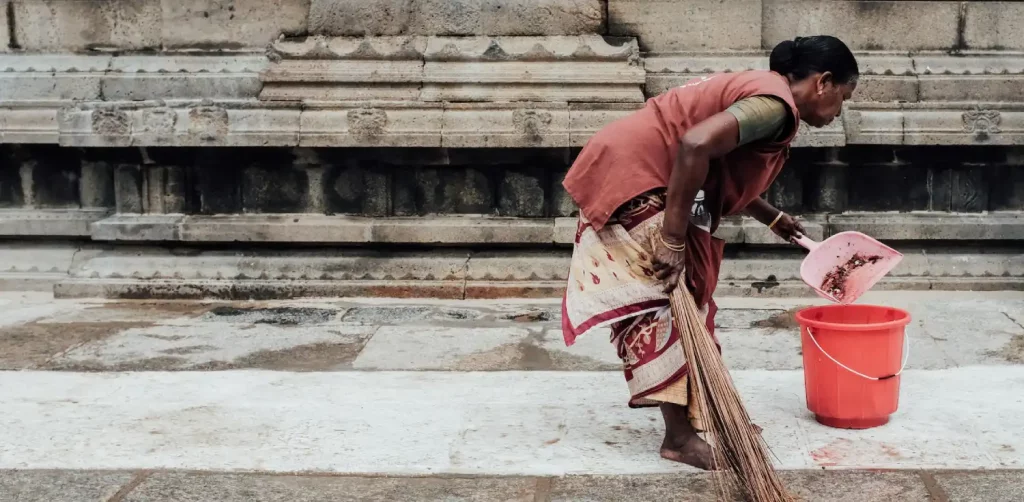
Photo: Steve Rybka on Unsplash.
Climate change has brought many changes to the planet; the rising temperature is one of them. As the world gets hotter, more adjustments must be made to adapt to the changing climate. In India, a heat insurance scheme has been launched to protect female informal workers against heatwaves.
Current deadly heatwaves
The United States National Centers for Environmental Information recorded 2022 as the sixth warmest year since 1880. In recent years, more attention has been centered on limiting global warming from breaching the 1.5 °C threshold.
The rising earth’s temperature resulted in highly unpredictable and more severe weather, including heatwaves. India is one of the countries suffering from the deadly heat. Studies show that the average temperature in India has risen around 0.7˚C between 1901-2018, burdening public health, the economy, and the country’s progress toward sustainable development.
The extreme heatwave is hazardous to informal workers who often work outdoors with little protection and financial safety nets. The World Bank estimated that the number of hours considered unsafe to do outdoor work will increase by 15% in 2030. Recently, the Arsht-Rock Foundation launched the Extreme Heat Income Micro-Insurance to help female informal workers in India protect their income during severe heatwaves.
Heat insurance
Most women in India work in informal sectors, such as waste recycling and street vending. These occupations often require them to work outdoors, where they get direct exposure to the weather. When heatwaves strike, these workers must choose between keeping working and risking their health or staying cool and losing their daily income.
The Extreme Heat Income Micro-Insurance aims to protect female workers in India against heat waves. It is a form of parametric insurance that will automatically pay the member’s bank accounts when the extreme heat reaches the point deemed unsafe to work. Currently, the insurance is designed to pay an estimated $3 per day and can be paid out multiple times. The program will cover the premium fee during the pilot phase, and there will be a nominal program fee for participants.
Women’s resilience against disaster
Today, more adjustments must be made to adapt to the changing climate. The Extreme Heat Income Insurance ran its pilot phase in April 2023. It aims to target 21,000 women who are members of the Self-Employed Women’s Association (SEWA). As strengthening women’s resilience against disaster encompasses multiple aspects, the Arsht-Rock Foundation, SEWA, and Blue Marble will further explore solutions that include personal accident, maternity care, and disability insurance. Accelerating women’s resilience against disaster marks progress to sustainable development where no one is left behind.
Editor: Nazalea Kusuma
Co-create positive impact for people and the planet.
Amidst today’s increasingly complex global challenges, equipping yourself, team, and communities with interdisciplinary and cross-sectoral insights on sustainability-related issues and sustainable development is no longer optional — it is a strategic necessity to stay ahead and stay relevant.
Kresentia Madina
Madina is the Assistant Manager of Stakeholder Engagement at Green Network Asia. She holds a bachelor’s degree in English Studies from Universitas Indonesia. As part of the GNA In-House Team, she supports the organization's multi-stakeholder engagement across international organizations, governments, businesses, civil society, and grassroots communities through digital publications, events, capacity building, and research.
 Whimsymaxxing and Beyond: Rethinking the Waste Behind Viral Trends
  Seeking Guidance from Karl Marx to Face the Climate Catastrophe
  Indonesia’s Greenwashing Diplomacy at COP31 and Beyond
  The Textile Industry Is Growing, and So Is Textile Wastewater
  EESG: We Need a New Economic Narrative for Sustainability in the Age of AI, Energy Crisis, and Geopolitical Divide
  The Continued Struggle for Equality and Dignity in Women’s Sportswear