

Exploring the Bidirectional Relationship Between Olympic Games and the Environment
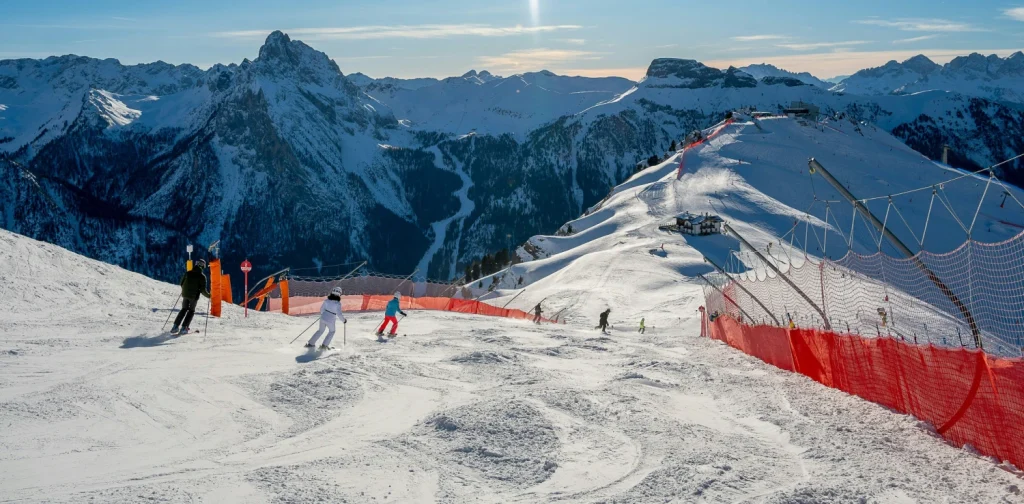
Photo: Piotr Musioł on Unsplash.
Sport is an instrument of soft power in modern international relations. Many global sporting events, such as the Olympic Games, bring together athletes from diverse backgrounds. However, criticisms on major sport competitions for their potential environmental impacts have long been an issue.
Environmental Risks of Olympic Games
The 25th Winter Olympics, or Milano Cortina 2026, were held from February 6th to the 22nd. The Paralympic Games would then follow, from March 6th to the 15th. Unfortunately, these events brought consequences to the natural ecosystems of the venues in Milan and Cortina d’Ampezzo.
Cortina d’Ampezzo is located in the Italian Alps. The town is surrounded by the Dolomites mountain range, a UNESCO World Heritage Site. The heritage landmark is, however, now marred by incessant construction projects and timber felling for the Olympics preparation. Additionally, the Olympics drew approximately 84.8 million cubic feet of water from the Alpine rivers and streams for snowmaking. This happened against the growing pressure on the rivers’ freshwater supply due to rising temperature and declining snow and rainfall.
Furthermore, Milano Cortina is not the first Olympic event that faces criticism for its ecological damage. The Sochi 2014 Winter Olympics caused quite an extensive harm with their constructions in the bed of the Mzyma river, discharge of toxic fluids, and exploitation against natural resources.
In general, according to a report by Rapid Transition Alliance, global sport events are equivalent to medium-sized countries in their carbon emissions. While there have been efforts toward sustainability in global sport events, greenwashing often ensues. For instance, a study reveals that the sustainability outcomes of the Summer and Winter Olympics generally fall short of the rhetoric that has been painted by the organizers.
Bidirectional Impacts
The relationship between sports and the environment is bidirectional. It means that major sporting events may cause environmental problems, and said ecological devastation consequently decreases the accessibility to many sports.
Climate change will negatively impact the capacity of roughly half of the former Olympic Winter Games hosts. Melting glaciers and deteriorating snow, for instance, will likely affect many Winter events. This might push countries to adopt technological advancements to tackle this issue in upcoming Games.
Besides the Olympics, there have been other instances where extreme weather influenced sporting events. In 2018, the United States (US) Open tennis tournament organizers had to establish an extreme heat policy to help players cope with high temperatures. Similarly, an ongoing bushfire during the Australian Open in 2020 in Melbourne forced one tennis athlete to retire due to breathing problems.
Fostering Sustainability in the Olympics
Albeit challenging, organizing more sustainable Olympic Games is possible. In fact, Milano Cortina 2026 was initially on the right track by generating a greenhouse gas management strategy. The committees also planned several initiatives to reduce carbon footprint, such as using renewable energy, limiting food waste, and supporting a circular economy. However, the implementation remains not as ideal as the plan of action.
Ultimately, the Olympic Games need an overhaul to minimize environmental and social risks. Organizers can consider the possibility of event downsizing, which can reduce costs and risks. Supposedly, small scale events would be easier to manage, making it possible to opt for green energy use and collaborate with local businesses.
Additionally, rotating the Games among representative cities from each continent offers a way to reuse the existing infrastructure. Even if new infrastructures have to be built, the organizers must consider the utilization of recycled materials. Supporting wider digital viewing of the Olympic Games, as previously done during the Tokyo 2020 Summer Olympics, can also be a viable option to keep the festivities with fewer travels. Of course, new approaches must be explored carefully with the full consideration of the Olympics’ environmental, socio-cultural, and political impacts.
Editors: Kresentia Madina & Nazalea Kusuma

Co-create positive impact for people and the planet.
Amidst today’s increasingly complex global challenges, equipping yourself, team, and communities with interdisciplinary and cross-sectoral insights on sustainability-related issues and sustainable development is no longer optional — it is a strategic necessity to stay ahead and stay relevant.
 EESG: We Need a New Economic Narrative for Sustainability in the Age of AI, Energy Crisis, and Geopolitical Divide
  The Continued Struggle for Equality and Dignity in Women’s Sportswear
  Behavior Change for the Planet: Is composting worth it?
  Building Bridges Between Environmental Policy and Mental Health
  We May Surpass 1.5°C Soon, But We Can Do Something About It
  From European Heat to the Himalayan Flood: The Transboundary Nature of Climate Risk