

Proceed with Caution: Intersectional and Whole-of-Earth Approach in the Global Energy Transition
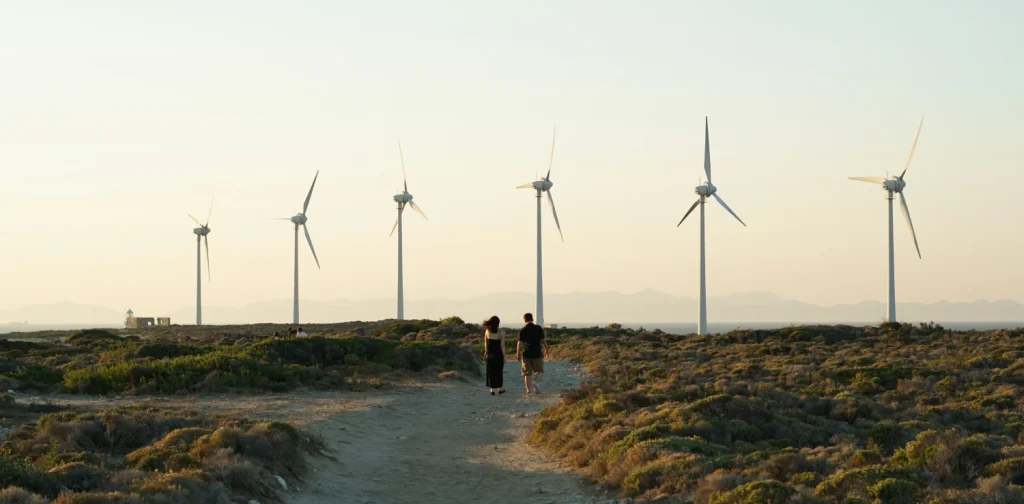
Photo: Duygu Güngör on Unsplash.
Humanity’s pursuit of development has been leaving its marks on the planet. The Intergovernmental Panel on Climate Change states that human activities have unequivocally caused climate change. Hence, for our continued survival on Earth, the world has been trying to find ways to keep supporting society and development while restoring the planet and ensuring its wellbeing for lifetimes to come. One key pillar of this effort is energy transition. But there is a lot more to it than a simple tap out of fossil fuels.
Global Energy Transition Progress
In his remarks on Climate Action, UN Secretary-General António Guterres said that renewable energy is “the foundation of energy security and sovereignty.” The transition from fossil fuels to clean and renewable energy sources like solar, water, and wind is central to the global efforts toward decarbonization and in halting global warming.
The change is happening. In the first half of 2025, renewables overtook coal as the world’s primary source of electricity, according to a report by Ember. Furthermore, the International Energy Agency (IEA) projects that by 2050, almost 90% of global electricity generation will have come from renewable sources.
Another key driver is electrification. Electrification refers to swapping fossil-fuelled tools and systems to electrically-powered ones. An example is electric vehicles (EVs), which can supposedly curb up to 1.5 gigatons of CO2 per year during their lifetime. With increased industrial participation, policy support, and public awareness, production of and demand for EVs has been steadily growing.
However, the global energy transition is not without complications.
“From Latin America’s copper to Africa’s cobalt and Asia’s nickel, resource wealth rarely translates to sustainable development and sovereignty. The global decarbonization agenda is no different. It has the risk of benefitting only the few and wreaking havoc on the rest of the people and the natural world,” wrote Gustavo Pessoa in his Opinion article on Green Network Asia.
Caution: Deforestation and Biodiversity Loss
While the main driver of deforestation remains agriculture, the increasing demand for renewable energy generation adds significant pressure on forests and all that live in them. This comes about especially through increased mining activities.
Mining has long been an industry that drives deforestation and biodiversity loss through massive logging and land conversion. Between 2000 and 2019 alone, the sector caused the destruction of at least 3,264 km2 of the world’s forests.
Meanwhile, the production of ‘green’ technologies like solar panels and EVs requires the intensifying extraction of critical minerals like lithium, cobalt, and nickel. One case study hails from Raja Ampat, Indonesia. The land clearing for nickel mining there led to the loss of more than 500 hectares of forest and natural vegetation.
Furthermore, deforestation within mining areas drives deforestation outside as well. This then leads to increased human access, resulting in poaching and general habitat encroachment. With reduced habitat, wildlife may enter human settlements in search for food and living spaces and cause conflict. A study published in the Journal for Nature Conservation assessed that 84% of the IUCN Red List species are threatened by mining-induced habitat encroachment.
Caution: Labor Exploitation
Among key factors in any widespread transition—including the global energy transition—is the workforce. Concerns are rising over the increasing risk of labor exploitation in the renewable supply chain. Solar energy, in particular, is under the spotlight over this matter. The Global Slavery Index 2023 reported that G20 countries imported USD 14.8 billion worth of solar panels at risk of modern slavery.
Modern slavery refers to situations where one cannot refuse work due to threats, violence, coercion, deception, or power abuse. Human trafficking, forced labor, and forced marriage fall under this umbrella. Concerningly, modern slavery can occur in every stage of the renewable supply chain.
A study reveals that critical components of solar panels worldwide are produced in regions where forced labor and child labor are prevalent. For example, approximately 40% of the global polysilicon supply, important in solar photovoltaics, comes from the Xinjiang Uyghur Autonomous Region. Additionally, 15–30% of the cobalt for lithium-ion batteries is mined in the Democratic Republic of Congo amidst rampant labor exploitation and other human rights violations.
Caution: Other Environmental and Social Impacts
Besides deforestation and biodiversity loss, energy transition may also threaten other parts of Earth. The deforestation from nickel mining in Raja Ampat, for instance, has triggered soil runoff. This then worsens coastal sedimentation, damages coral reefs, and disrupts marine ecosystems.
Another example comes from China. The construction of the Medog Hydropower Station on the Yarlung Tsangpo river in the Tibet Autonomous Region (TAR) may result in the thawing of permafrost in the area due to the drilling. This would release methane, a greenhouse gas that contributes to global warming. Additionally, the project may exacerbate the consequences of extreme landslides and earthquakes, which the location is prone to.
Beyond the natural environment, the impacts on surrounding communities are also undeniable. From mining to dam constructions, these activities involve land conversions. Beside displacing trees and wildlife, these projects often forcibly displace communities as well.
Toward a Just Energy Transition
It is unfortunate that the transition toward a more sustainable future with clean and renewable energy comes with a caveat regarding ecosystem destruction, biodiversity loss, habitat destruction, and human rights violations. These impacts often go unnoticed—or deliberately ignored and covered up—because they occur upstream. However, they must be acknowledged, addressed, and mitigated.
The energy sector must develop a transition roadmap based on human rights principles with full consideration of the whole-of-earth. Governments, international organizations, and companies must pay attention to the entire value chain instead of only the end product or the end goal of a net-zero world.
This approach involves consultations with all relevant stakeholders. It is especially important to uphold the rights of Indigenous Peoples and Local Communities (IPLC) and respect their territories, where most of these critical minerals are. Ultimately, a just energy transition must take into account the experience of the affected and vulnerable to formulate a fair and inclusive roadmap toward a better future for people and the planet.

Co-create positive impact for people and the planet.
Amidst today’s increasingly complex global challenges, equipping yourself, team, and communities with interdisciplinary and cross-sectoral insights on sustainability-related issues and sustainable development is no longer optional — it is a strategic necessity to stay ahead and stay relevant.
 Indonesia’s Greenwashing Diplomacy at COP31 and Beyond
  The Textile Industry Is Growing, and So Is Textile Wastewater
  EESG: We Need a New Economic Narrative for Sustainability in the Age of AI, Energy Crisis, and Geopolitical Divide
  The Continued Struggle for Equality and Dignity in Women’s Sportswear
  Behavior Change for the Planet: Is composting worth it?
  Building Bridges Between Environmental Policy and Mental Health