

100 years of Sir David Attenborough: A Voice Calling for the Celebration and Care of Nature
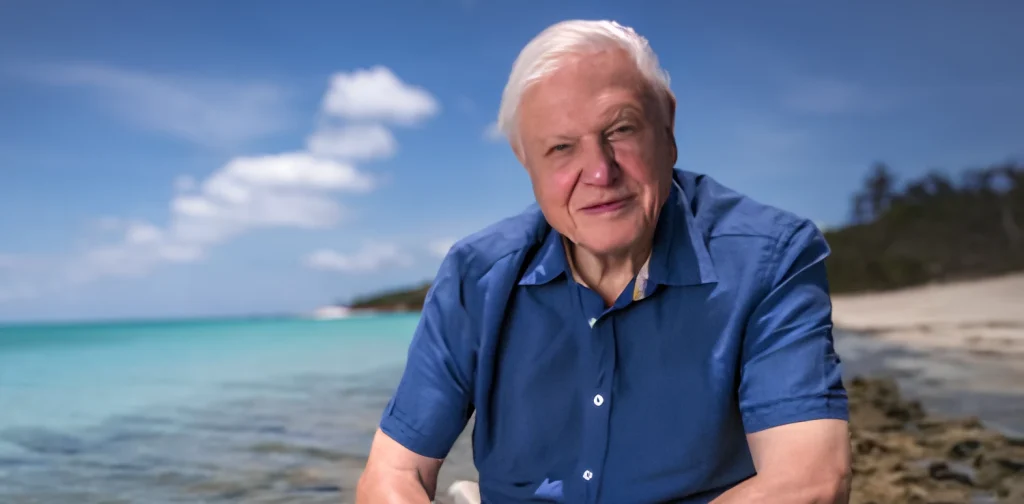
Photo: Department of Foreign Affairs and Trade website – www.dfat.gov.au.
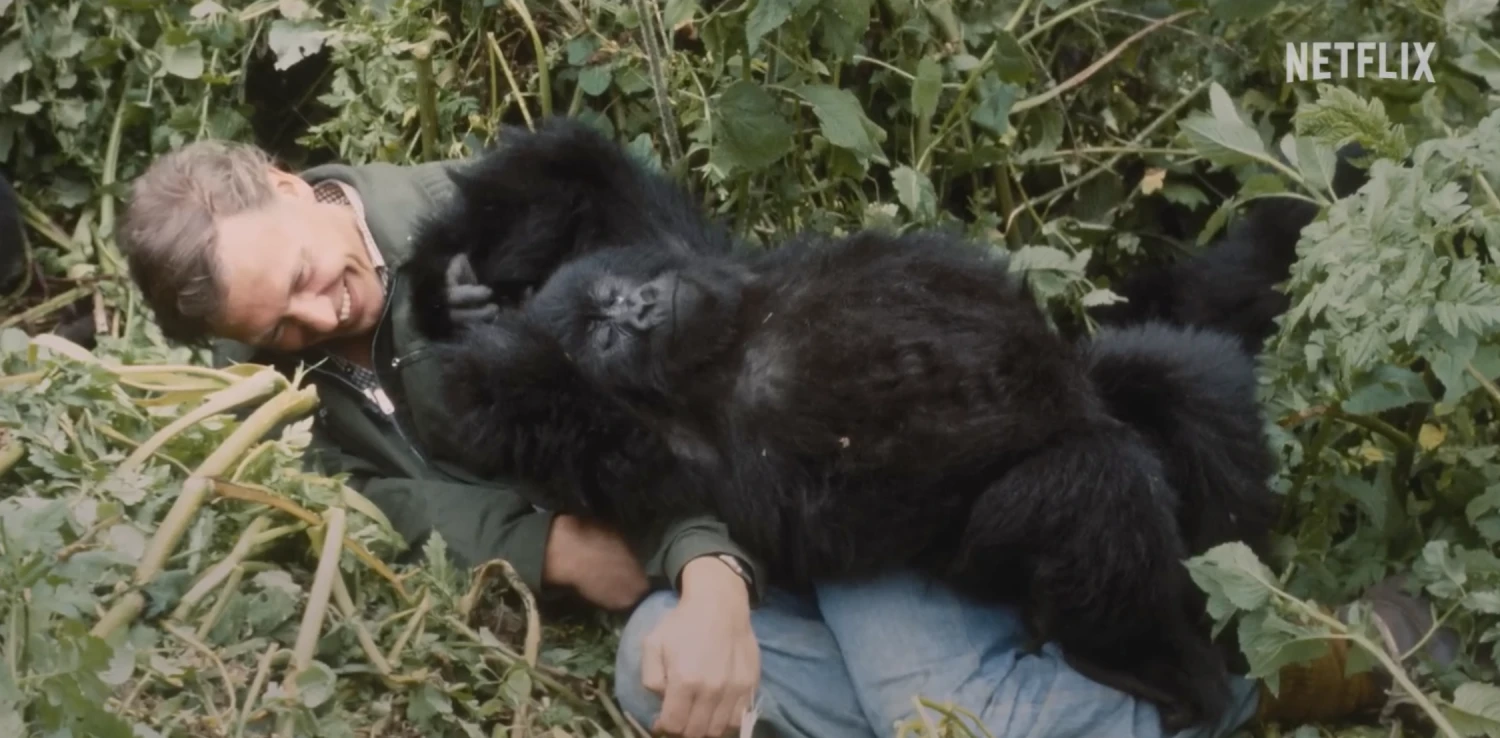
In 1978, a 52 year-old man sat cross-legged on the mossy ground of a forest in Rwanda. He was then approached by two young mountain gorillas, without any prompting or luring of food. Driven purely by curiosity, the gorillas climbed onto the man’s shoulders, ruffled his hair, and rested on him comfortably as on an old tree. The man remained motionless. With tears welling in his eyes, David Attenborough whispered to the camera, voice filled with overwhelming awe, “There is more meaning in that one encounter than we can ever fully express.”
The scene was neither planned nor indicated in the script in any way. That genuineness is precisely why that moment remains vivid in the memories of millions almost five decades later. It was a moment when science, the human spirit, and the blessings of nature met without any interference. Despite forgetting the exact year when I first saw that scene, one thing always rings true for me: it is one of those scenes that encourages me to continue wandering the universe, marveling at the grandeur and fragility of the Earth we inhabit.
Today, May 8, 2026, Sir David Frederick Attenborough turns one hundred, with over seven decades of work in natural history broadcasting and storytelling. In the UK and around the world, the week is marked by a series of special broadcasts on the BBC, a live concert at the Royal Albert Hall, events at museums, and tree plantings. But this celebration feels different from your typical public figure’s birthday. Beyond a tribute to a broadcaster who lives a long life and narrates beautiful images, it’s a collective recognition of a man who has helped millions understand that nature is not just a backdrop for human life, but a living system that underpins everything.
Journey from Nature to Executive Office, Back to Nature
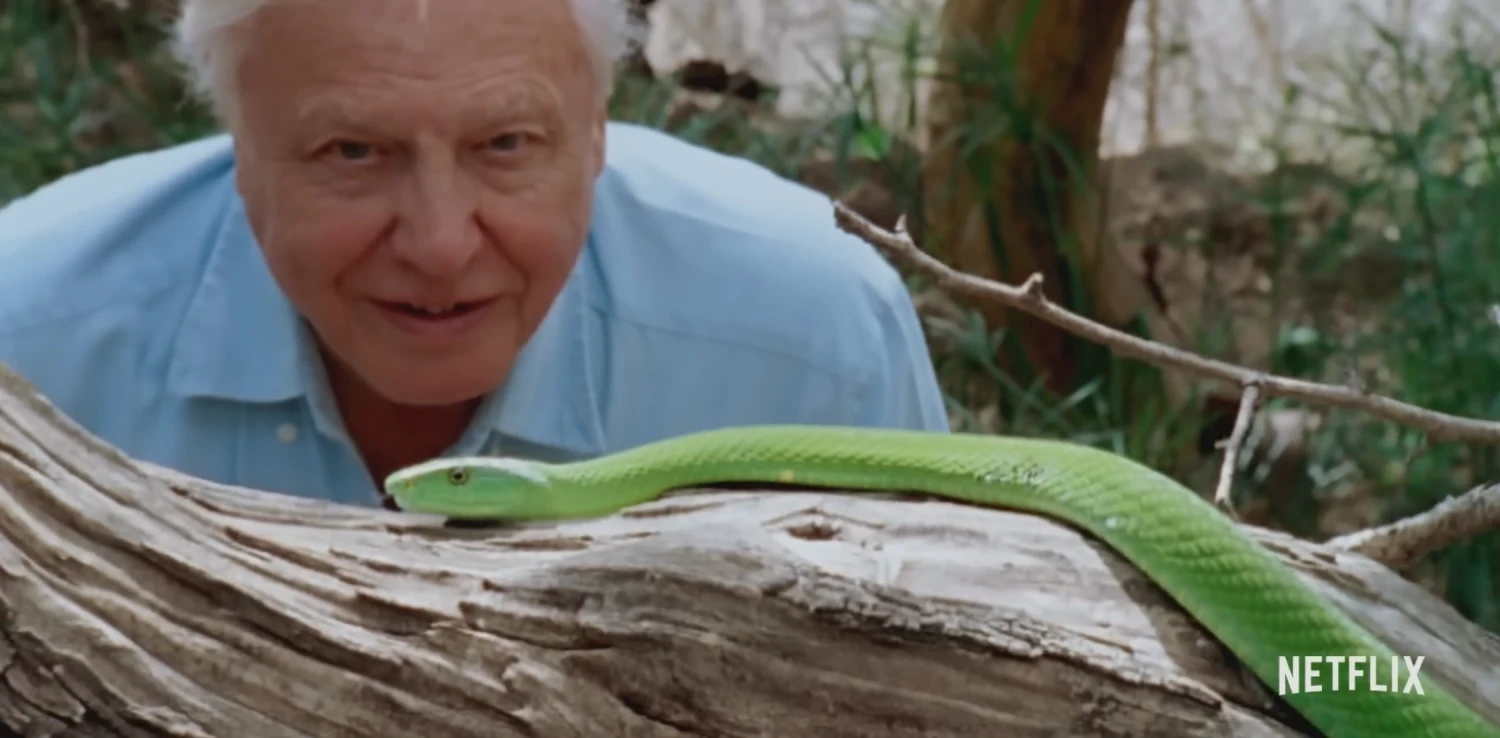
Attenborough spent his childhood collecting fossils, insects, and dried seahorses. He grew up at the University College Leicester, where his father was rector. He then went on to study geology and zoology at the Clare College, Cambridge, before joining the BBC in 1952. Two years later, he was accepted as a trainee producer. That same year, he traveled to Sierra Leone for the Zoo Quest series.
From there, he brought back footage of the rare White-necked Picathartes bird, and this trip marked the beginning of his extraordinary career in front of the camera. Attenborough’s formula was present from day one: go, observe carefully, explain clearly, and invite the audience into a state of wonder instead of lecturing them to sleep. He has never underestimated the audience; he trusted them to rise to his level. That trust would become the foundation of all his great work.
The Zoo Quest brought Attenborough sailing to Indonesia in 1956 for a Dragon expedition. The trip had one goal: to film Komodo dragons in their natural habitat. The series produced the world’s first television footage of Komodo dragons in the wild, an achievement that still leaves people in awe, even by today’s standards.
Indonesia gave him more than just an ancient lizard. On that same trip, he came face-to-face with orangutans for the first time in the jungles of Borneo, the red primates that would become one of the most recurring and beloved subjects of his career. At the time, the Borneo jungle was still virtually untouched: a vast expanse of green canopy, full of sound, teeming with life. The young Attenborough took it all in with wide eyes, unaware that he was preserving the memories of a world that would change forever.
In the 1960s, Attenborough forwent his camera and moved up to the executive chair at the BBC Two. Under his leadership, Attenborough introduced color broadcasting to the UK, beating Germany to become the first country in Europe to broadcast color programming. He was the one who commissioned the popular sketch comedy show Monty Python’s Flying Circus. In 1973, he resigned from that role and returned to his passion for documenting nature.
What emerged from that decision was Life on Earth (1979). Attenborough wrote the entire 13-hour script and traveled the world for three years, chronicling the evolutionary journey from simple organisms to humans. Beyond entertainment, the series was a visual environmental education meant to be accessible to everyone. While natural history programs on TV were still seen as a specialist genre for amateur naturalists in the early 1950s when Attenborough first joined BBC, he had transformed it into one of television’s most popular genres and a powerful channel for science communication three decades later.
Masterpieces followed in waves: The Living Planet, The Trials of Life, The Blue Planet, Planet Earth, Frozen Planet, Dynasties, Wild Isles. David Attenborough is the only person to win a British Academy of Film and Television Arts (BAFTA) award in the era of black-and-white, color, HD, 3D, and 4K television. Each production pushed the boundaries of nature-filming technology further, with infrared cameras, deep-sea diving equipment, miniature drones capable of following eagles in flight.
But technology was only a tool. What fueled viewers’ anticipation was his calm, rich, never-judgmental voice, always with the childlike curiosity of seeing a firefly for the first time. Under Attenborough’s narration, a bird of paradise in New Guinea, a polar bear in the Arctic, a whale in the deep sea, and a frog in the rainforest become part of the audience’s most important and fascinating universe.
Igniting Changes
Still, there is a danger in simply celebrating beauty. Attenborough understands this better than anyone. He sees the planet he loves undergoing systematic destruction as he gets older. As such, Attenborough has dedicated much of his 90s to raising public awareness as climate change accelerates.
His documentary series Blue Planet II (2017) features an albatross unknowingly feeding its chick plastic debris from the ocean. The scene rattled public opinion, prompting the British government and major retailers to announce plastic reduction measures. The series goes way above good television—it provides evidence from the field that can help shape public policy. Then, at the COP26 in Glasgow, the 95-year-old Attenborough delivered a fiery speech to world leaders, declaring that they have the power to save the planet if they work together.
Netflix’s A Life on Our Planet (2020) is his personal testimony, the confession of a man who has witnessed firsthand how the world has changed in nearly a century and who chooses to use it not as an elegy but as an urgent warning. In the documentary, Attenborough recounts, among other things, how he returned to search for orangutans in Borneo only to discover that the deforestation there had reduced the population by two-thirds since he first saw them.
On screen, an orangutan explores the remains of a bare tree trunk, holding onto a home that no longer exists, replaced by neat rows of palm oil plantation. Millions of viewers worldwide were brought to tears. As the guardian of one-third of Earth’s remaining tropical forests and thousands of endemic species, what happens to Indonesia’s forests is not just a local concern: it is a measure of how seriously we are taking—or betraying—the responsibility entrusted to us by nature.
In 2025, at the age of 99, Attenborough released “Ocean with David Attenborough”, a feature-length film calling for the protection of the world’s oceans. The film brings a powerful message: “If we save the sea, we save our world.” Many critics have called this film his masterpiece, a declaration of love and an ultimatum to civilization. Watching it, I couldn’t decide which was more powerful: the love or the ultimatum. Perhaps Attenborough is that exceptional person who can deliver such a message so balanced.
David Attenborough’s Legacy and Message
Attenborough’s legacy certainly extends beyond the screen. More than 40 new species have been named after him, among them the giant carnivorous plant Nepenthes attenboroughii and the tiny Brazilian songbird Polioptila attenboroughi. There is a British researcher ship carrying his name through frozen seas.
Moreover, scientists around the world admit that their interest in nature began from a scene they saw on the family television, whether it was an electric eel, a flock of pink flamingos, or a gorilla smiling at the camera. It is likely that everyone who has seen Attenborough’s work has been inspired to some degree to care for the natural world.
Today, as we celebrate his 100th birthday, it might be tempting to wrap all this under the blanket of nostalgia, celebrating the past when the world seemed better on screen. But Attenborough never lets himself slip into that trap. He is a disciplined optimist: someone who knows full well the extent of the damage, yet chooses to show that recovery is possible. That fish populations in protected marine areas could recover in five years. That a deforested forest can grow back when nature takes over, especially with the help of human knowledge. That a blue whale, nearly extinct due to industrial hunting, is now once again traversing the southern oceans.
His life so far is a century-long bridge between curiosity and critical thinking. He was born before television broadcasting, and now lives to see the era of streaming, Artificial Intelligence, and widespread ecological anxiety on a global scale. No other living person has witnessed, documented, and communicated the planet’s journey with the depth and breadth he demonstrated. And this, for me, is what makes Attenborough’s 100th birthday celebration not just a memory, but, above all, a challenge.
Every child captivated by Planet Earth II, every biology student who decides to venture into the field, every journalist who chooses to cover the biodiversity crisis over celebrity scandals, every young filmmaker who turns their camera to the wilds around them, the corporate executives who decide on a business model that is good for nature, and the politicians and bureaucrats who push for pro-sustainability policies are all answering that challenge. They are all a continuation of the conversation he began in the Sierra Leonean jungle seven decades ago.
David Attenborough’s greatest legacy to us all is not just the memory of the species and breathtakingly beautiful landscapes captured in his films, but the sense of shared responsibility to ensure that what we see on screen remains preserved for generations to come. That task is never over. It has only just begun, with a scale and urgency that even the young Attenborough could not have imagined when he first looked into the eyes of a gorilla and felt, for a moment, that the boundary between humanity and nature had completely vanished.
Happy birthday, Sir David. Thank you so much for all you do. We heard your message clearly, and we promise to continue speaking out and take action for the planet.
Translator: Kresentia Madina
Editor: Abul Muamar & Nazalea Kusuma
The original version of this article is published in Indonesian at Green Network Asia – Indonesia.
Co-create positive impact for people and the planet.
Amidst today’s increasingly complex global challenges, equipping yourself, team, and communities with interdisciplinary and cross-sectoral insights on sustainability-related issues and sustainable development is no longer optional — it is a strategic necessity to stay ahead and stay relevant.

Jalal
Jalal is a Senior Advisor at Green Network Asia. He is a sustainability consultant, advisor, and provocateur with over 25 years of professional experience. He has worked for several multilateral organizations and national and multinational companies as a subject matter expert, advisor, and board committee member in CSR, sustainability, and ESG. He has founded and become a principal consultant in several sustainability consultancies as well as served as a board committee member and volunteer at various social organizations that promote sustainability.
 From European Heat to the Himalayan Flood: The Transboundary Nature of Climate Risk
  Noise Pollution Is Making Us Sick, and Climate Change Is Making It Worse
  Beyond Fashion: The Environmental Cost Behind Animal Leather
  Addressing the Hidden Risk of Microplastics from Offshore Infrastructures
  Addressing Antimicrobial Resistance as More Than a Medical Issue
  Holding Harmful Industries Liable for Harm to Human Life and the Environment