

Opportunities and Challenges in Implementing Biodiversity Credits for Biodiversity Financing in Indonesia
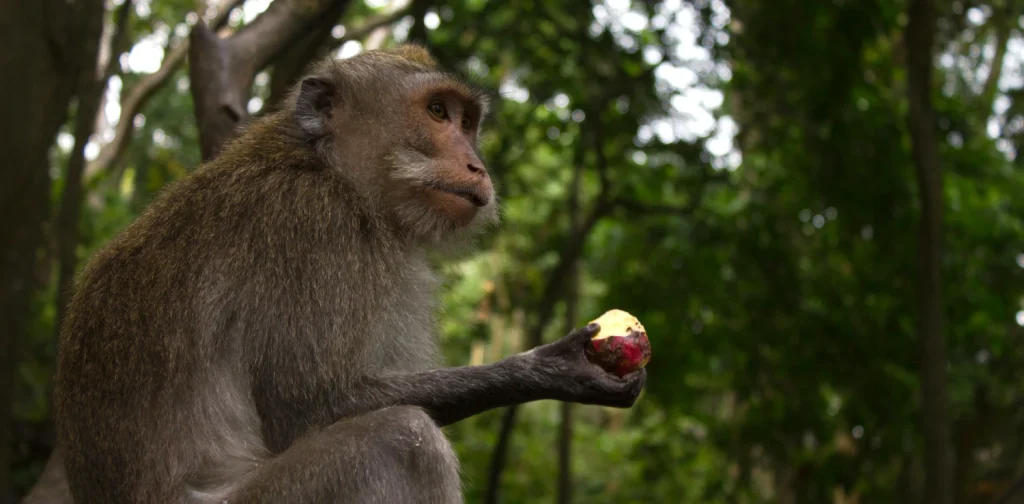
Photo: Manuel Pappacena on Unsplash.
A healthy and balanced environment needs healthy, prosperous biodiversity. Unfortunately, many human activities have led us to a state of biodiversity crisis. We are seeing ecosystem destruction, species extinction, and habitat degradation everywhere. While the crisis is worldwide, it is especially worrying in regions with rich biodiversity that supports local livelihood, global supply, and planetary health, like Indonesia. The situation is further complicated by the often limited funding for biodiversity protection and restoration. In this light, Indonesia is looking into high-integrity biodiversity credits as a potential pathway to strengthening the biodiversity financing ecosystem.
Indonesia’s Biodiversity Crisis
Indonesia is one of the world’s megabiodiversity spots. Yet, various indicators point to increasing pressure on its species and ecosystems. The conversion of natural forests to plantations, mining, and infrastructure is a major driver of deforestation and habitat fragmentation. These issues directly reduce the ecosystem’s carrying capacity for endemic species. Additionally, loss of forest cover and land use change are closely linked to decreased genetic diversity and increased extinction risk in species with limited range.
By 2025, at least 2,432 species in Indonesia are under threat of extinction. This figure consists of 1,381 plants, 554 mammals, and 395 birds. The most extreme population declines are seen in endemic megafauna species. One example is the Javan rhinoceros, of which only around 75 individuals remain, concentrated in the Ujung Kulon National Park. Meanwhile, the Bornean orangutan population has declined drastically from approximately 288,500 individuals in 1973 to only about 47,000 in 2025.
Ecosystem degradation is also occurring in landscapes that serve as habitat for key species. This is true for the Sumatran tiger, for instance. This endemic tiger species relies heavily on primary forests and landscape connectivity to maintain its population.
Beside terrestrial ecosystems, coastal and marine ecosystems are also under significant pressure. The conversion of mangrove forests for aquaculture, tourism areas, and coastal infrastructure remains a major cause of degradation. Furthermore, increased extractive activities in coastal areas and small islands, including nickel mining and sand dredging, contribute to the degradation of coral reef habitats.
Biodiversity Financing Limits
Concerningly, Indonesia’s biodiversity crisis is becoming increasingly difficult to address due to limited funding. The IBSAP 2025–2045 document and Bappenas–BIOFIN (2024) analysis of biodiversity financing needs indicate that the funding required to achieve national biodiversity targets is around 75.53 trillion IDR per year. Meanwhile, the average directly identifiable state budget allocation for biodiversity for the 2020–2024 period was only around 8.24–9.93 trillion IDR per year.
The figures illustrate a significant funding gap that impacts various aspects. It puts limits to conservation area management and ecosystem restoration. It also hinders the protection of priority species, which often require long-term investment and stable funding.
The structure of biodiversity financing in Indonesia is heavily dependent on government spending and international grant support, while mobilization of non-state budget domestic funding sources remains limited. Studies show that alternative financing mechanisms have not been optimally utilized to support conservation at an adequate scale. Unfortunate, since there are various existing ones already, such as environmental trust funds, Payment for Ecosystem Services (PES), green sukuk, and ecological-based fiscal instruments.
Indonesia’s guidelines for biodiversity budgeting at ministries/agencies also emphasize that biodiversity financing is scattered across various ministries/agencies—making it difficult to track comprehensively—and not yet fully integrated into the development financing framework. This situation confounds the effectiveness of existing spending and complicates planning for long-term investment needs.
Indonesia’s national planning documents highlight the need for diversification of funding sources and an increased role for private investment and financial institutions to achieve biodiversity targets. However, private sector contributions to biodiversity financing remain relatively small and are generally voluntary. For example, they do so through corporate social responsibility (CSR) programs or specific project partnerships. There is no systematic and sustainable financing flow.
Implementing High Integrity Biodiversity Credits
In this light, the Indonesian government is preparing a high integrity biodiversity credits instrument. This policy and implementation is an effort to strengthen the national biodiversity financing framework and shift toward a nature-positive approach. The biodiversity credits instrument will be a results-based mechanism that can encourage transparent and accountable public and private sector contributions to conservation efforts, ecosystem restoration, and the protection of priority species and habitats.
To achieve this goal, the Ministry of Environment has several steps. These include active participation in the International Advisory Panel on Biodiversity Credits (IAPB) Policy Forum; drafting a “nature-positive” policy and the utilization of the biodiversity credits instrument; intensive dialogue and collaboration with stakeholders; and establishing an Indonesian biodiversity credits technical team to develop credible and accountable policies, standards, and implementation instruments.
In addition to biodiversity credits, the Ministry of Environment and Forestry, along with its partners, is also strengthening the Access and Benefit Sharing (ABS) mechanism for genetic resources. This should ensure equitable benefit sharing in accordance with the Convention on Biological Diversity (CBD), the Nagoya Protocol, and the Kunming-Montreal Global Biodiversity Framework.
Conceptually, biodiversity credits have the potential to strengthen the biodiversity financing ecosystem. This instrument can open up new funding sources beyond the state budget, philanthropy, and international grants by connecting measurable conservation projects with buyers (corporations, financial institutions, or even local governments) that share nature-positive commitments.
Several global initiatives, such as the World Economic Forum’s Biodiversity Credit Market Initiative and the International Advisory Panel on Biodiversity Credits’ framework, demonstrate that this scheme can work. It can create results-based finance flows and increase economic incentives for local communities and landscape managers. Moreover, it can support long-term financing for ecosystem restoration, which has previously been difficult to finance through annual project mechanisms.
Challenges to Address
However, several fundamental challenges determine whether this instrument can truly have an impact. The first is ecological integrity and measurement methodology. Unlike carbon, which is measured in tons of CO₂e, biodiversity is multidimensional. It comprises species composition, ecosystem structure, and landscape connectivity, among others. This multidimensionality makes it difficult to simplify into a single, equivalent, tradable credit unit.
The second challenge is the risk of greenwashing and unreliable claims. This issue is especially relevant when businesses often use these credits as a reputational tool only. Third, the certainty of market demand is limited. This is because most schemes are voluntary, so the pricing and sustainability of the biodiversity financing remains unstable.
The fourth challenge is equity and governance. This involves how benefits are shared with Indigenous peoples and local communities. It should also address how to prevent the commodification of nature, which could marginalize actors who have been maintaining ecosystems.
In the Indonesian context, institutional readiness and a regulatory framework are serious challenges. The country needs a robust biodiversity baseline system, measurement, reporting, and verification (MRV) mechanisms and a national registry to avoid double counting. It also requires integration with other instruments such as social forestry, equitable payments for environmental services, and performance-based funding, which it lacks. Without these prerequisites, biodiversity credits risk becoming instruments that simply facilitate financial transactions without generating real ecological improvements.
Toward Integrated Biodiversity Financing
Ultimately, biodiversity credits must be positioned as an instrument to achieve the fundamental goal of ensuring that biodiversity protection and restoration are integrated into economic systems and development financing. Its ability to close the biodiversity financing gap is key.
Biodiversity credits should be able to direct long-term funding flows to activities that maintain ecosystem carrying capacity, strengthen science-based management, and provide equitable benefits to communities living in and around high conservation value areas. Therefore, their success should be measured by verified ecological and social impacts. With proper implementation, Indonesia should see improved habitat quality, maintained landscape connectivity, and improved species population conditions. Only then, biodiversity credits can successfully serve as a policy instrument that positions biodiversity as a foundation for sustainable development.
Editor and Translator: Nazalea Kusuma
The original version of this article is published in Indonesian at Green Network Asia – Indonesia.
Co-create positive impact for people and the planet.
Amidst today’s increasingly complex global challenges, equipping yourself, team, and communities with interdisciplinary and cross-sectoral insights on sustainability-related issues and sustainable development is no longer optional — it is a strategic necessity to stay ahead and stay relevant.
 EESG: We Need a New Economic Narrative for Sustainability in the Age of AI, Energy Crisis, and Geopolitical Divide
  The Continued Struggle for Equality and Dignity in Women’s Sportswear
  Behavior Change for the Planet: Is composting worth it?
  Building Bridges Between Environmental Policy and Mental Health
  We May Surpass 1.5°C Soon, But We Can Do Something About It
  From European Heat to the Himalayan Flood: The Transboundary Nature of Climate Risk