

Rethinking Agrifood Policies for Healthy Diets for Everyone
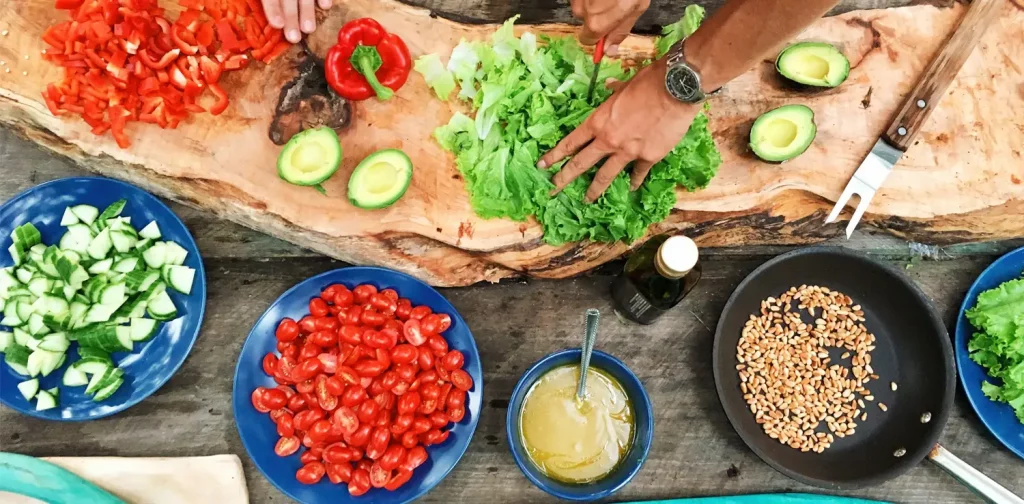
Photo by Maarten van den Heuvel on Pexels.
We have been through a lot these past few years. The COVID-19 pandemic, conflicts, and climate change have reversed what little progress we’ve made to achieve a world with zero hunger.
FAO (Food and Agriculture Organization of the UN) recently released a report on The State of Food Security and Nutrition in the World 2022. According to the report, around 702-828 million people worldwide may have faced hunger in 2021, with more than half of them from Asia.
Additionally, almost 2.3 billion people were moderately or severely food insecure, lacking regular access to adequate food. Nutrition-wise, things are worse. Nearly 3.1 billion people could not afford a healthy, balanced diet in 2020 when data was last available.
Improper Food and Agriculture Policy Support
The current crises continue to cause rising food costs and supply chain disruptions. Then, improper policy support makes it worse.
From 2013-2018, worldwide governments allocated nearly USD 630 billion a year on average to the food and agriculture sector. However, their forms of support have mostly distorted market prices, harmed the environment, and hurt small-scale producers and Indigenous Peoples. The existing policies also fail to provide healthy diets for everyone.
These government policies generally cover trade and market interventions that generate price incentives or disincentives, fiscal subsidies, and general services support. Overall, their support primarily concentrates on staple foods, dairy, and other animal-source protein-rich foods while mostly neglecting or even penalizing the production of fruits and vegetables.
In short, the report reveals that the current policy support from governments discourages diversity in agriculture and food production. This lack of food diversification is unsustainable—harmful to the planet and failing to deliver healthy, nutritious diets to people.
Better, Not More
With the consideration that most world governments cannot afford to allocate more money to support the food and agriculture sector, FAO shares some insights for improvement. It is possible to use the same budgets and reallocate them to provide healthy diets that are more affordable, accessible, sustainable, and inclusive.
Redesigning fiscal subsidies, border measures, and market price controls makes up the bulk of the strategy. However, policymakers must watch out for the potential trade-offs in poverty reduction, farm incomes, total agricultural output, and economic recovery. They should be ready with various social protection policies in the environment, health system, energy, and other sectors.
However, this strategy cannot stand alone. Stakeholders should actively promote healthy food environments and empower consumers to choose healthy diets. Examples include creating food reformulation and fortification policies, regulating food labeling and marketing, taxing energy-dense foods, and procuring healthy public food.
Of course, collaboration is crucial. Governments must closely engage SMEs, civil society groups, and global organizations to balance the unequal powers in the agriculture and food sector. To help achieve this, the UN is forming Coalition to Repurpose Public Support to Food and Agriculture with international organizations, non-profit organizations, governments, farmers, and other organizations.
Read the full report here.

Nazalea Kusuma
Naz is the Manager of International Digital Publications at Green Network Asia. She is an experienced and passionate writer, editor, proofreader, translator, and creative designer with over a decade of portfolio. Her history of living in multiple areas across Southeast Asia and studying Urban and Regional Planning exposed her to diverse peoples and cultures, enriching her perspectives and sharpening her intersectionality mindset in her storytelling and advocacy on sustainability-related issues and sustainable development.
 Women in Waste Management: Asia’s Circularity Runs on Women. Its Policies Still Don’t
  Embracing the Business Value of Sustainability
  American Farmers Call for Government Support Amidst PFAS Contamination
  Asia Pacific’s SDG Progress Faces Major Setbacks
  Exploring the Bidirectional Relationship Between Olympic Games and the Environment
  The Hidden Threat of Tire Pollution to Salmon Populations