

‘Not Old Enough’: Child and Youth Activists’ Struggle in Human Rights Work
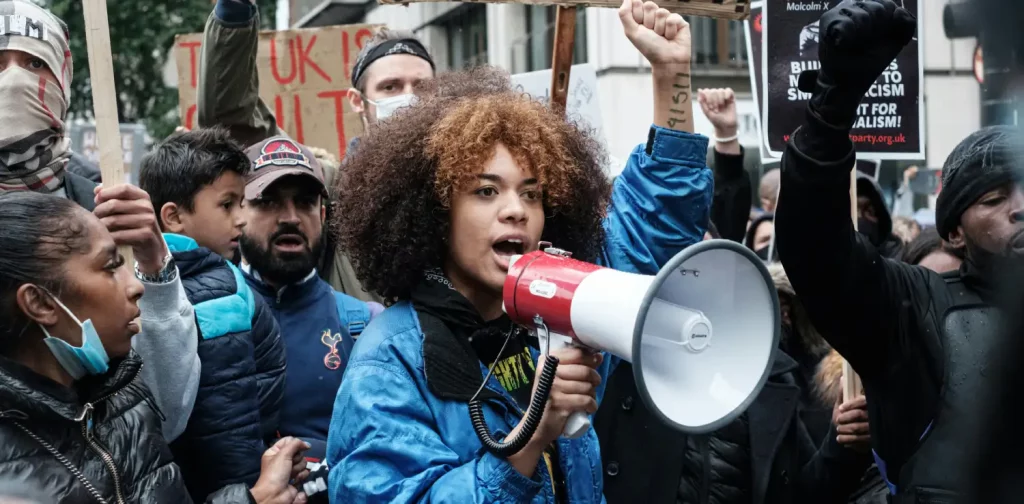
Photo: Ehimetalor Akhere Unuabona on Unsplash.
Young people are agents of change. They play a significant part in raising awareness and taking action on various issues, including climate crisis, inequality, and human rights. However, child and youth activists remain vulnerable in their activism. Addressing the specific challenges faced by child and youth activists is critical to support their mission for a better world.
Child and Youth Activists
Youth participation and engagement in a broad spectrum of issues are critical. Their voices, thoughts, and ideas offer essential perspectives in policy-making processes to be more fair and inclusive. However, there are specific vulnerabilities that come with this involvement.
In a thematic report, the United Nations Special Rapporteur on the situation of human rights defenders, Mary Lawlor, examined young activists’ structural, societal, and legal challenges in their advocacy efforts. The report was formulated based on consultations with child and youth activists, academics, and civil society organizations in relevant fields to discover the current state, barriers, and opportunities for child and young activists.
The Prevalent Ageism
The report defines child and youth activists as those under 18 and 32 years of age, respectively, who are involved in peacefully promoting, protecting, and defending the human rights of others. While their young age can offer fresh and unique perspectives on advocacy efforts and policy-making, many of these activists still struggle with age-related bias.
One of the main barriers is the lack of support. Due to their age, child and young activists often do not receive enough financial, legal, and psychological support from traditional allies and organizations. Additionally, the lack of personal financial resources and networks compared to older activists hinders their access to support. In cases where support is available, many still lack the specific facilities to address the unique challenges and vulnerabilities faced by child and young activists.
This age-related bias also translates to a lack of recognition and credibility. Child and young activists’ words and works are often seen as less trustworthy and valid than adult activists. Academic and reputational risks exist, such as those still in school receiving academic sanctions for their human rights work. These sanctions can discourage students from activism for fear of a tainted track record.
Furthermore, age can pose significant limitations in human rights work, including causing a lack of freedom to associate, assemble, express, and participate in larger and more important settings. These barriers are even more heightened for girls, young women, and gender-nonconforming activists.
Providing Necessary Support
The world is currently experiencing a poly-crisis. It is the same world young people are born into and grow up in. Therefore, it is only fair if we allow, support, and safeguard space for children and youth to engage, advocate, and support their rights and those of others.
Governments, civil society organizations, and other relevant stakeholders’ roles are critical. The Special Rapporteur concluded the report by sharing recommendations to tackle this issue, some of them are:
- Adopt specific laws and policies to enhance protection for child and young activists and systematically involve them in decision-making processes at all levels.
- Promote intergenerational collaboration and mentorship within the human rights community.
- Raise awareness among child and youth human rights defenders of existing practices, platforms, and protection mechanisms for reporting human rights violations and for seeking support.
Read the full report here.
Editor: Nazalea Kusuma

Kresentia Madina
Madina is the Assistant Manager of Stakeholder Engagement at Green Network Asia. She holds a bachelor’s degree in English Studies from Universitas Indonesia. As part of the GNA In-House Team, she supports the organization's multi-stakeholder engagement across international organizations, governments, businesses, civil society, and grassroots communities through digital publications, events, capacity building, and research.
 Whimsymaxxing and Beyond: Rethinking the Waste Behind Viral Trends
  Seeking Guidance from Karl Marx to Face the Climate Catastrophe
  Indonesia’s Greenwashing Diplomacy at COP31 and Beyond
  The Textile Industry Is Growing, and So Is Textile Wastewater
  EESG: We Need a New Economic Narrative for Sustainability in the Age of AI, Energy Crisis, and Geopolitical Divide
  The Continued Struggle for Equality and Dignity in Women’s Sportswear