

Call for Governance: Grassroots Initiatives Look to Scale Efforts to Conserve Depleting Groundwater
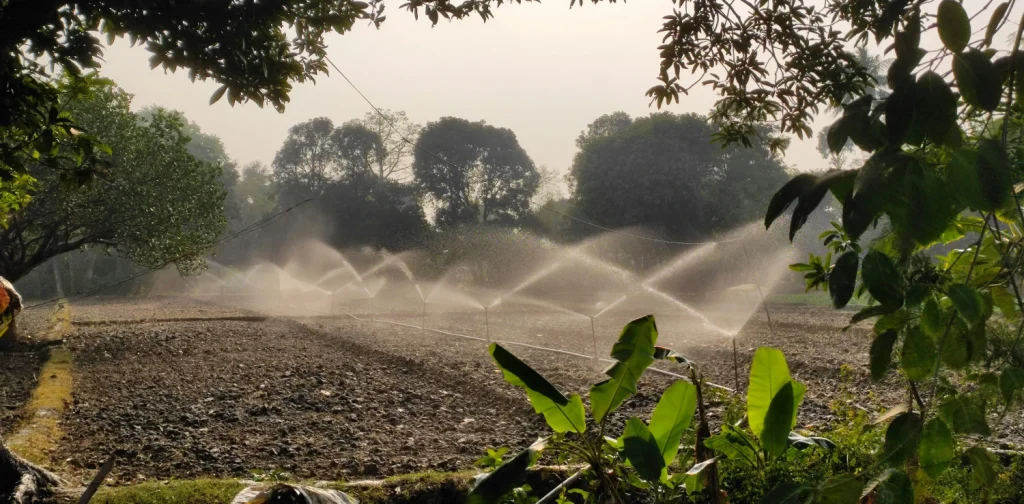
Photo: Shyamli Kashyap on Unsplash.
With ever increasing demands on the world’s freshwater supplies, there is a growing call to protect a key resource that often goes unnoticed. Groundwater reserves are the reason there is so much freshwater readily available to use in homes and in imperative industries such as farming and manufacturing. Unfortunately, groundwater is draining at alarming amounts. In the absence of adequate governance, local communities are taking it upon themselves to curb rapid groundwater depletion.
Understanding Groundwater Depletion
Groundwater is water found naturally in aquifer zones underground, in the space between soil and rock. Around 50% of the world’s urban and over 90% of the world’s rural populations survive on this vital but unseen reserve of freshwater. This water is naturally replenished through rain or snowmelt. More recently, though, man-made efforts like percolation ponds or injection wells have come into the mix.
Unfortunately, current concerns about climate change and infrastructure misuse are propelling fears of groundwater depletion in the near future. Around the world, cities from the US to the Middle East to South Africa, are facing drying wells and aquifers. People worldwide are struggling with varying states of water crisis, with those of vulnerable groups and regions experiencing disproportionate impacts that threaten their health and wellbeing.
Moreover, groundwater overuse can have catastrophic effects on the planet. One of them is land subsidence, in which the land surface starts to sink due to a rapid drop of the water content. Over-extraction can also lead to aquifer contamination. It means changes to water pressure and flow can lead to dangerous substances such as arsenic and nickel to seep in from surrounding environments. Additionally, if groundwater is replenished by redirecting water from rivers or lakes without proper measures, those bodies of water also start to suffer.
Grassroots Efforts Around the World
In many of the most water-stressed regions of the world, local community-led initiatives lead the progress. An example hails from Yemen, where groundwater is pumped at almost twice the recharge rate.
In response to the crisis, many small-scale farmers have started to lead their own efforts. They have curbed the cultivation of bananas due to its large amounts of water use. They have also moved to control the digging of borewells and to emphasize the building of deep wells. Many wells are now jointly owned and multi-purpose for farming and domestic uses. This practice ensures that cooperation between the communities is a priority.
Meanwhile, the percentage of groundwater extraction in Iran is higher than the world average. There, small communities are turning towards their ancestral practices in land and water development for solutions. Many are going back to using qanat systems, underground tunnels at the base of mountains that use gravity to transport water to towns. This helps to control evaporation rates, as well as contamination concerns. There are also initiatives underway to grow crops in accordance with water availability to maximize efficiency.
Call for Scale and Systemic Interventions
Essentially, grassroots movements like these set up an alternative type of local water market. And when they become collective enough, they can influence larger governing bodies. This should result in the systemic collaboration of local traditions and formal institutions. Additionally, these grassroots efforts have contributed to scholarly work and studies that are aiming to establish a more sustainable framework for groundwater management.
As increasing demand for water puts strain on industries and governments, countries around the world began to pay attention to this invisible yet essential resource. In 2022, the United Nations hosted the very first UN Water Summit on Groundwater, raising the profile of the issue. It was again highlighted as a priority at the UN’s COP28 summit in 2023.
Ultimately, with the growing monitoring of groundwater and public-private cooperation, replenishing reservoirs and wells is possible. From raising awareness and policy interventions to reviving ancient practices and developing new technologies, stakeholders of all levels can collaborate to find solutions.
Editor: Nazalea Kusuma

Co-create positive impact for people and the planet.
Amidst today’s increasingly complex global challenges, equipping yourself, team, and communities with interdisciplinary and cross-sectoral insights on sustainability-related issues and sustainable development is no longer optional — it is a strategic necessity to stay ahead and stay relevant.
 Whimsymaxxing and Beyond: Rethinking the Waste Behind Viral Trends
  Seeking Guidance from Karl Marx to Face the Climate Catastrophe
  Indonesia’s Greenwashing Diplomacy at COP31 and Beyond
  The Textile Industry Is Growing, and So Is Textile Wastewater
  EESG: We Need a New Economic Narrative for Sustainability in the Age of AI, Energy Crisis, and Geopolitical Divide
  The Continued Struggle for Equality and Dignity in Women’s Sportswear