

New Study Highlights the Usage Eco-friendly Fishing Gear in Indonesia
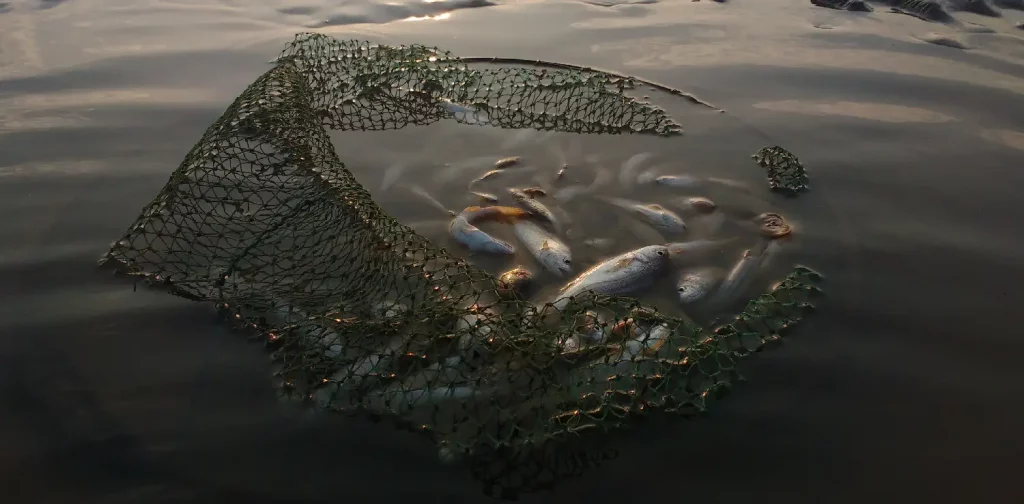
Photo: Riddhiman Bhowmik on Unsplash.
The oceans are vast and full of resources. However, those resources are not infinite. Proper management of ocean resources must be implemented to maintain healthy ecosystems and harness their true potential, including using eco-friendly fishing gear to support sustainable fisheries management. A new study shares contributing aspects to fishermen’s adoption of eco-friendly fishing gear in Indonesia.
Fishing Gear Impacts
Fishing has been an essential part of human lives for millennia. For coastal communities, it is one of the primary sources of income and livelihoods. Fishing is catching marine animals like fish, crabs, and shellfish, for food and often for commercial purposes. Fishing hooks, gillnets, trawls, and dredges are some of the most common gears used for fishing.
Over time, the use of inappropriate fishing gears meant to maximize catch has caused the overexploitation of marine wildlife and the destruction of their habitats. For instance, trawling—dragging nets across the seafloor by boat—can damage coral reefs, seagrass, and other marine life habitats.
Furthermore, the World Wildlife Fund stated that 40% (38 million tonnes) of annual global marine catch is bycatch, or unwanted and unused catch, caused by unsustainable fishing gear and practices. It can lead to a population decrease in marine biodiversity. Therefore, adopting sustainable fishing gear should be encouraged to minimize marine exploitation while still delivering high economic value.
Utilizing Eco-friendly Fishing Gear
A study led by researchers from the Ministry of Marine Affairs and Fisheries of Indonesia shares several aspects that contribute to the utilization of eco-friendly fishing gear (EFFG) in Indonesia. The study identifies fish traps and gillnets as EFFG, while dredges and trawls are considered non-EFFG.
Based on samples from 647 blue-swimming crab fishermen in two coastal regions in Indonesia, Cirebon and Demak, the study finds financial resources important. As purchasing this type of gear requires significant funding, fishermen who utilize EFFG usually have better financial capability and credit access to financial resources.
Furthermore, the study found that those who utilize eco-friendly fishing gear have higher involvement and interactions in fisheries groups than the fishermen who don’t. An understanding of sustainable fisheries between fishermen and customers can also contribute to the utilization of EFFG, as the customers’ demand for environmental consideration can drive fishermen to adopt more sustainable gear.
Sustainable Marine Ecosystems
Utilizing eco-friendly fishing gear contributes to fishermen’s welfare and environmental preservation. According to the study, fishermen with EFFG generate more catch and yearly income than non-EFFG fishermen. Additionally, using EFFG reduces the chance of catching unintended targets, such as crabs that are laying eggs.
The study concludes with a call for Indonesia and other developing countries to design effective policies and strategies for the implementation of eco-friendly fishing gear. Facilitating credit access, broadening EFFG information dissemination, and developing sustainable fishing initiatives are crucial to support global efforts for sustainable marine ecosystems.
Editor: Nazalea Kusuma

Kresentia Madina
Madina is the Assistant Manager of Stakeholder Engagement at Green Network Asia. She holds a bachelor’s degree in English Studies from Universitas Indonesia. As part of the GNA In-House Team, she supports the organization's multi-stakeholder engagement across international organizations, governments, businesses, civil society, and grassroots communities through digital publications, events, capacity building, and research.
 Women in Waste Management: Asia’s Circularity Runs on Women. Its Policies Still Don’t
  Embracing the Business Value of Sustainability
  American Farmers Call for Government Support Amidst PFAS Contamination
  Asia Pacific’s SDG Progress Faces Major Setbacks
  Exploring the Bidirectional Relationship Between Olympic Games and the Environment
  The Hidden Threat of Tire Pollution to Salmon Populations