

UNICEF Report Highlights Key Trends on Children’s Development
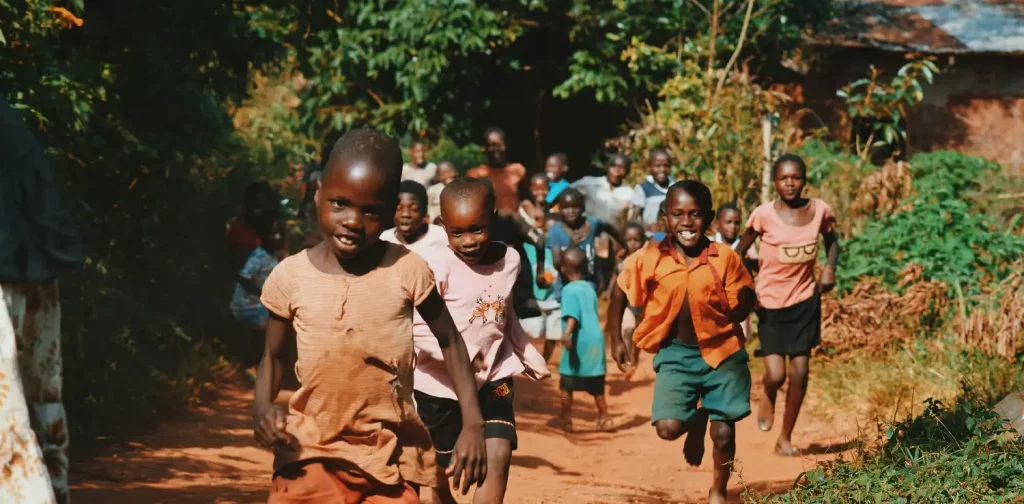
Photo: Seth Doyle on Unsplash.
The call to leave no one behind must be at the heart of every sustainable development initiative. This includes cultivating a supportive environment for children as one of the vulnerable groups. As the world changes and crises emerge, what is the current global outlook on children’s development?
Children’s Development and Rights
Every child has the right to a healthy, safe, and supportive environment growing up. It includes sufficient nutrition, quality education, accessible healthcare services, and proper safety nets against poverty. Unfortunately, fulfilling this right remains a struggle in many parts of the world. Roughly 333 million children still live in extreme poverty, while 78 million don’t go to school.
In January 2024, UNICEF published its flagship report titled “Prospects for Children in 2024: Cooperation in a Fragmented World”. It aims to examine key trends affecting children’s development in 2024 and beyond.
Key Factors
In recent years, the world has experienced various economic and political changes. The report stated that geopolitical shifts and the increasing risk of conflict threaten children’s development, survival, and wellbeing.
For instance, more than 10,000 children have been killed from October 2023 to January 2024 due to Israel’s airstrikes and violence on Palestine’s Gaza. Between 2005 and 2022, UNICEF confirmed 315,000 grave violations against children in conflict, including sexual violence, abduction, and maiming. The weakening multilateral relationship between countries can also inhibit the collective efforts to protect children and end conflicts.
According to the report, trade restrictions and economic inequities also affect children’s development and well-being. These restrictions are reflected in the surge of prices in the global food market, increasing the risk of malnutrition in children. The report cites an analysis by UNICEF that shows over 2 million newborns in 127 low- and middle-income countries may have been at risk of stunting due to rising food prices caused by the Russia–Ukraine war.
Furthermore, climate change and everything that follows can affect children as well. The report listed health risks from El-Nino, mosquito-borne diseases, and water scarcity as some climate change-related factors affecting children. For instance, there was an 8% rise in the number of deaths due to malaria between 2019 and 2021, largely affected by rising temperatures and erratic rainfall patterns linked to climate change. Additionally, protecting children’s rights amidst technological development and energy transition is also highlighted to avoid child exploitation.
Global Synergy and Cooperation Needed
Many factors can influence children’s lives and futures. The report concludes with four scenarios exploring how the world might change from 2024 to 2050 based on the degree of geopolitical and economic cooperation and the rate of technological advancement. The scenarios highlighted global synergy as the most optimistic outlook on children’s development, as it can improve access to education, healthcare, food security, and economic prosperity. On the other hand, the fragmented world scenario where the world is divided presents a bleak future for children. Thus, the report also serves as a call for global cooperation and policies to safeguard and enhance children’s rights, safety, and well-being.
Read the full report here.
Editor: Nazalea Kusuma

Kresentia Madina
Madina is the Assistant Manager of Stakeholder Engagement at Green Network Asia. She holds a bachelor’s degree in English Studies from Universitas Indonesia. As part of the GNA In-House Team, she supports the organization's multi-stakeholder engagement across international organizations, governments, businesses, civil society, and grassroots communities through digital publications, events, capacity building, and research.
 Conservation Paradox: Managing the Overabundance of Endangered Koalas in South Australia
  Green Burnout: Sustainability Workers and Climate Activists Are Quietly Falling Apart
  The Warning Signals of Climate Change
  How Land Use and Climate Change Shape the Increasingly Precarious Balance of Global Deadwood Stocks
  The Injustice of Climate Finance: How Climate Change Is Draining Developing Nations
  The Need for One Health in Conservation