

Exploring Thematic Bonds and Sukuk to Finance Climate Action and SDGs in Indonesia
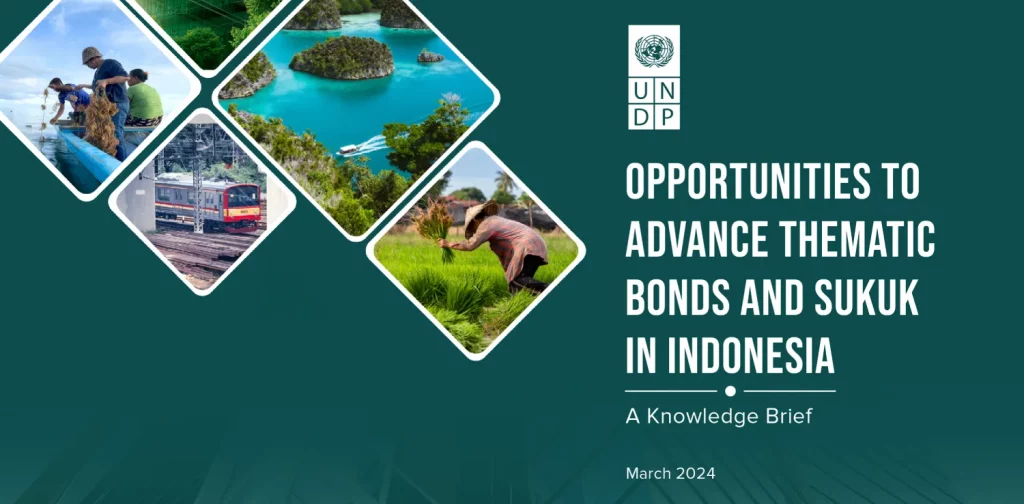
Photo: UNDP
Indonesia is an archipelago on the Ring of Fire, making the country extremely vulnerable to climate change impacts. Natural disasters, extreme weather events, and sea level rise are among Indonesia’s most dangerous hazards. As climate change exacerbates these risks, climate action and SDGs become crucial. In this light, UNDP Indonesia published a knowledge brief on thematic bonds and sukuk as ways to finance climate action and sustainable development.
Thematic Bonds and Sukuk
Between 1990 and 2021 alone, Indonesia experienced more than 300 natural disasters, such as floods, earthquakes, and volcanic activities. The COVID-19 pandemic also contributes to the country’s instability in the face of climate change. Post-pandemic, the Indonesian Ministry of National Development Planning (BAPPENAS) projects that Indonesia’s SDGs require approximately USD 8.7 trillion (IDR 122,000 trillion) in funding.
There are various financing mechanisms the country can implement to fulfill those financing needs, including thematic bonds and sukuk.
A bond is a fixed-income investment in which a loan is given and must be paid back at a specific date along with periodic interest payments. Thematic bonds are bonds with specific investment themes such as sustainability, climate change, education, etc. Meanwhile, sukuk is the Islamic bond, a Sharia-compliant approach to bonds.
Current Landscape in Indonesia
Indonesia has pioneered several sovereign thematic bonds and sukuk, such as the Green Sukuk, SDG Bond, and Blue Bond. These financing mechanisms have issued over USD 9.5 billion in the international and domestic markets.
The brief reveals that over the last five years (2018–2023), government issuances in the foreign market have made up the bulk of the total market share. In comparison, local currency issuance from the private sector comprises less than 10% of the total. The brief then states that encouraging issuances in local currency is important as they could reduce default risks and mitigate risks associated with foreign currency debt.
According to the brief, challenges faced by local Indonesian issuers of thematic bonds and sukuk are:
- Additional costs and resources are due to framework development, external reviews, eligible project identification, and impact reporting requirements.
- Identification and development of eligible projects that align with their chosen themes, are financially viable, and are impactful.
- Lack of incentives, especially for the short- and medium-term.
- Lack of knowledge and capacity in issuers, including lack of awareness and confusion in measuring sustainability performance and projects.
Opportunities for More
The brief also highlights the opportunities for Indonesia to advance thematic bonds and sukuk, such as by expanding the type of bonds. The ‘new and upcoming bonds’ identified are Blue Bonds, Transition Bonds, Sustainability-Linked Bonds, and Gender Bonds.
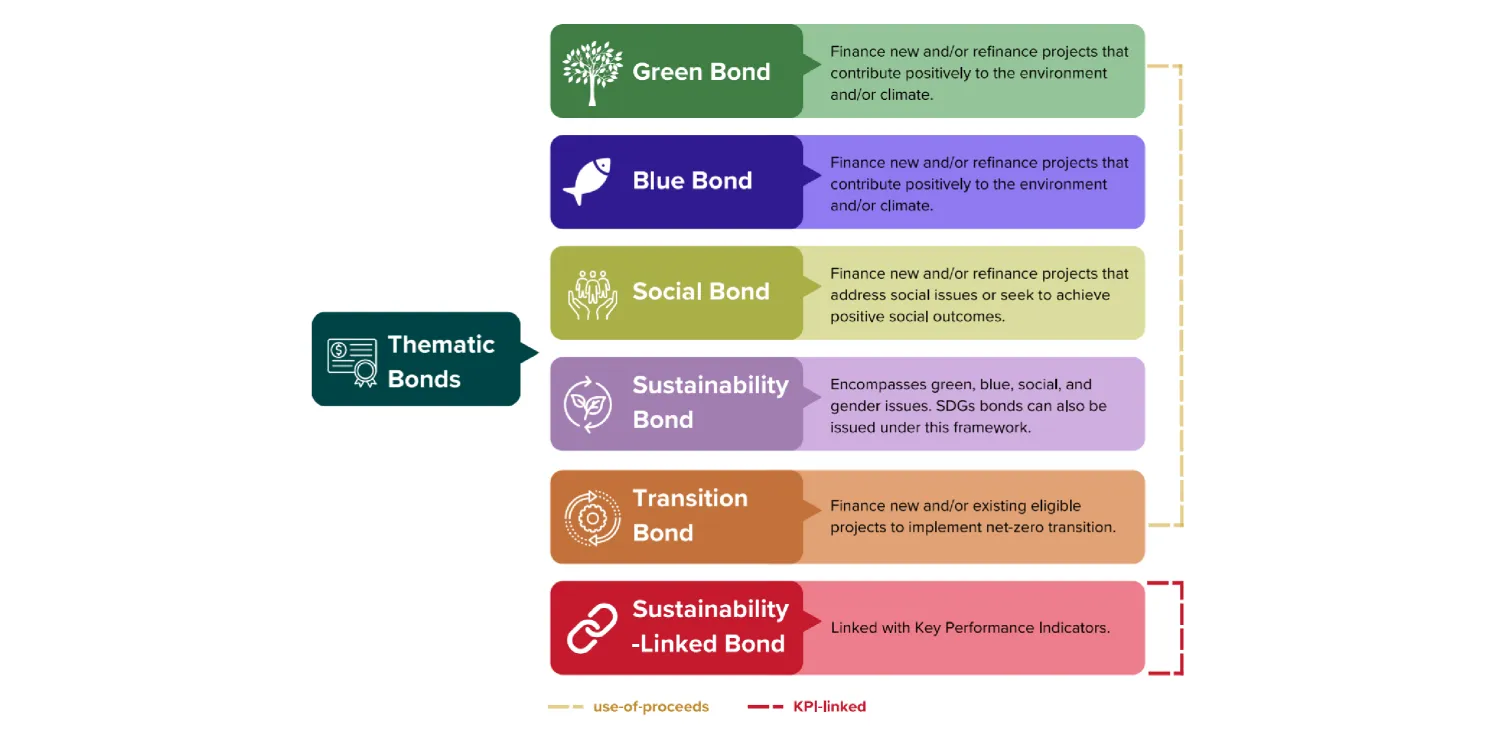
In summary, below are key takeaways and recommendations to maximize the issuance, impact, and opportunity of thematic bonds and sukuk in Indonesia:
- Regulatory support and further incentives are required to encourage local issuances and promote sustainable finance.
- The integrity and trustworthiness of domestic thematic bonds and sukuk must be ensured. Therefore, building a robust local ecosystem of quality local verifiers is essential.
- There is potential in exploring the implementation of guarantees for local currency-denominated bonds.
- Thematic bonds and sukuk have legitimate potential to finance just energy transition and sustainable development.
- Development partners must assist prospective issuers and promote an enabling environment for local issuances.
Most notably, Indonesia needs collaborative efforts from development partners to support the domestic issuance ecosystem. Development partners can provide expertise and guidance by sharing knowledge and best practices, technically assisting local issuers, and training local issuers and verifiers for capacity building. Overall, education and awareness about thematic bonds and sukuk are necessary.
Furthermore, endorsement and oversight from reputable development partners can enhance the credibility of Indonesia’s local thematic bonds and sukuk. Finally, financial backing from development partners can mitigate risks and foster partnerships between the public and private sectors, which is much needed to fulfill Indonesia’s climate and SDG financing needs.
Read the full document here.
 The Widespread Impacts of Severe Drought in Somalia
  Ensuring Access to Justice for Women and Girls
  The Invisible Infrastructure: What ASEAN’s Carbon Market Needs Most
  Indonesia Ruled to Recognize Chronic Illness as a Disability
  Clean Cooking as a Developmental Multiplier in Africa
  Congo Basin Peatlands Are Releasing Ancient Carbon